The Beginning
Six-time Zambian national champion Charles Banda discovered table tennis in 2016 at a school in Lusaka. He was nine years old, and the sport grabbed him immediately.
His first table? An old wooden table at school that was already in bad condition when he found it. His first equipment wasn't professional, far from it, actually, but it didn't matter. The interest was there.
"The equipment wasn't satisfying," Banda recalls about those early days. Equipment, he says, remains the biggest challenge in Zambia today.
A professional paddle in Zambia costs around 5,000 kwacha. It took Banda two months to save for one.
His parents saw the spark. When Banda decided to pursue table tennis full-time, they didn't hesitate. "They encouraged me to stay focused on the sport," he says. "I'd say they are my number one fans. I get motivated by them."
Without sponsors, Banda's family became everything: his funding, his support system, his reason to keep going. There were nights when that support was tested. Nights going to sleep with no food. Nights when the cost of chasing a dream meant making impossible choices. But his family stayed. And so did he.
Banda's role models? Egypt's Omar Assar and Sweden's Truls Moregårdh, two players whose games he studies closely, imagining what's possible when talent meets opportunity.
The Journey
As a teenager, Banda competed in the National Youth Games, reaching the semifinals. It was a great experience, he says.
Banda consistently played in Zambia's top 5 selection and national rankings, almost always coming out on top. Since 2020, he's won the Zambian National Championship six times, competing against roughly 90 players each year, a competitive field that shows both the talent present and the room for growth.
He trains now with a Table Stag racquet and Butterfly equipment. What he wishes he had? A Stiga Cybershape racquet and a Butterfly table.
The Support System
The Zambian Table Tennis Association has been there since day one, Banda says. Transportation to international tournaments when possible. Equipment support when available. Funding for international tournaments doesn't always materialize when needed.
"I can't talk a lot about the association because they have been there for me, not fully sponsoring, but the little they can, they do help me," he says. "I thank them a lot."
The reality is structural. Table tennis competes for limited resources in a country with competing athletic priorities. The association works within the constraints of capacity.
International Awakening
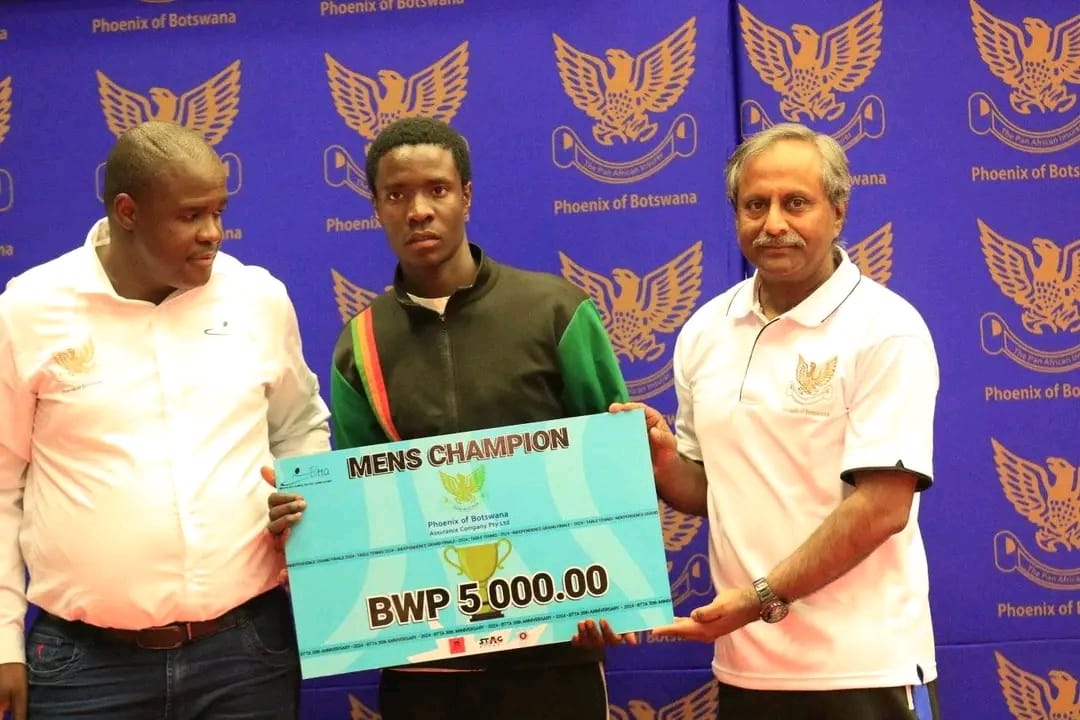
Banda's first international appearance came in 2021 in Botswana. The experience changed everything.
He won gold. But the medal wasn't what stayed with him. "It was an eye-opener. I saw for myself that if I keep working hard, I could be playing at such high levels of table tennis. It was overwhelming."
The competition in Botswana was advanced. The way players read the game, their tactical depth, the speed of their decisions, it was a different level entirely. He gained experience that day. That moment showed Banda what was possible. And it showed him how much work remained.
The Learning Curve
After Botswana, the tournaments came faster. Bigger stages. Tougher opponents.
The Senior African Championship in Algeria was Banda's first huge tournament. Everything was new. The nerves were real.
"I was a bit scared," Banda admits. But scared didn't mean unprepared. He beat tough players. The lesson: don't underrate anyone. Anything can happen in this game.
At the WTT Contender in South Africa, two tough wins. A round of 32 knockout. More lessons.
"Don't be emotional during the game," Banda says. "When you're playing a top player, don't rush to kill the ball. Just keep it in play."
The World Championships. Five regional games where Banda claimed bronze medals. Each tournament added another layer. Another lesson. Another proof that he belonged.
Six national championships in Zambia. Bronze medals at regional games. Rounds of 32 at international tournaments. Each result mapped progress.
The Mentality
Mental strength, Banda says, is one of his greatest assets. Before matches, he relies on visualization, positive self-talk, and breathing exercises to calm his nerves. Emotional strength. Mental strength. These are what separate him from the competition.
His pre-match routine? Exercise, prayer, self-warmup. Then he steps onto the court.
Through Banda's Eyes
Not many people in Zambia are familiar with table tennis. But Banda says it's fun being a player here. "People admire the art."
When he tells someone he's a professional table tennis player, reactions vary. Some encourage him to keep working hard toward his career. Others assume he's made money and wonder how he reached this level.
The reality? Banda is a full-time athlete, not working, not in school. Just training.
"Was it worth it?" he asks. "Yes."
Representing Zambia
When Banda puts on the Zambian national team jersey, he feels humbled. "It means a lot to me, putting on the colors of my nation, knowing very well that I'm representing my country and club."
What does he want the world to know about Zambian table tennis?
"They should know that there are quite a number of good table tennis players in Zambia. We're fighting to develop the sport in my country."
What's Next
After retirement, Banda plans to coach and open his own facility.
Six national championships. International gold. Full-time dedication. And a vision for Zambia's table tennis future that doesn't look like its past. Charles Banda is just getting started.
From a broken school table in Lusaka to six national titles and international gold, Charles Banda proves that with resilience, family, and unwavering dedication, Zambian table tennis has a champion worth knowing.
— The Dispatch —
Every story, first.
Get the latest table tennis stories, player profiles, and advocacy updates delivered to your inbox.
We respect your privacy. Unsubscribe at any time.