
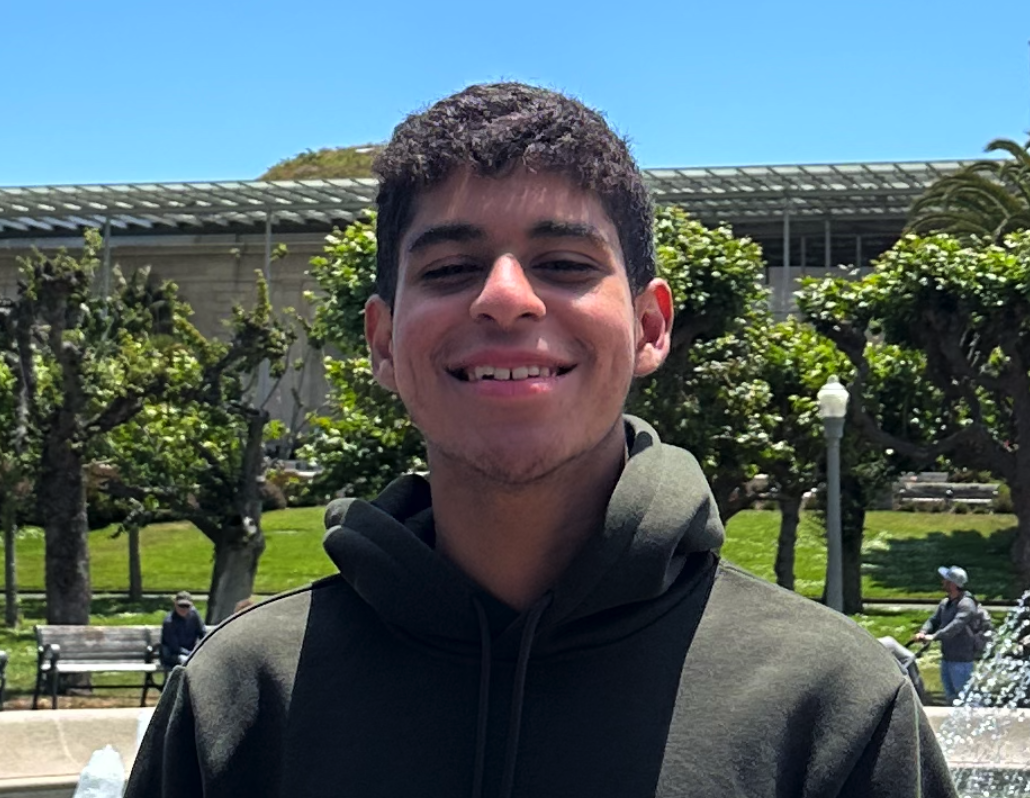
"It's not ping pong — it's table tennis. And no... but you're not ready for that conversation!"
That's Diana Santome's response when people ask if it gets boring watching a ping pong ball for so long. But boring? Two Olympic Games, tournaments on every continent, and a match that still gives her goosebumps say otherwise.
Diana Santome is Peru's only Blue Badge umpire and one of the most experienced officials in the sport. Her journey started where most table tennis stories do: with family.
The Beginning
Diana's father was a LATAM umpire. She grew up watching him officiate, absorbing the rules through conversation, learning the game from the other side of the table. At 15, she helped at her first national tournament.
"It was so exciting because it was the first time I was able to do what I had watched my father do for so many years," she recalls. "I felt very confident because I was always talking with him about the rules, so I knew exactly what I was doing."
Her father trained her. Which meant the stakes were personal. The hardest part of becoming a national umpire wasn't the exams themselves. It was the thought of failing her father's exams in front of everyone.
She didn't fail.
Going Beyond
Diana's father was a LATAM umpire because becoming an international one was extremely difficult at the time. Diana wanted more. When she earned her international certification, her first thought wasn't satisfaction. It was: "Well, what's next?"
What came next was the Blue Badge, the highest certification an umpire can achieve. It requires perfect knowledge of the rules, a written English exam, four "Meets Expectations" evaluations from three different evaluators, and an oral interview. Diana took the written exam in Chile and traveled to Canada to complete the evaluations. She completed everything in two months.
She is the only Blue Badge umpire in Peru. Other colleagues have tried. Some couldn't complete the process. It's not only about knowing the rules, Diana explains. You have to apply them in situations that don't look like the textbook.
The Cost of Being the Best
Maintaining Blue Badge status is expensive, especially for a South American umpire. The travel, the evaluations, the constant need to officiate internationally to keep your credentials active, all of it costs money. In Peru, you can't make a living from umpiring.
Diana made a choice. She left traditional employment. She manages personal projects and investments on her own terms. It's the only way to do the two things she loves most: traveling and umpiring.
"I'm a backpacker," she says. After tournaments, she stays extra days, sometimes months, discovering new cities. She leaves her luggage at a colleague's house and explores with a carry-on.
Tokyo and Paris
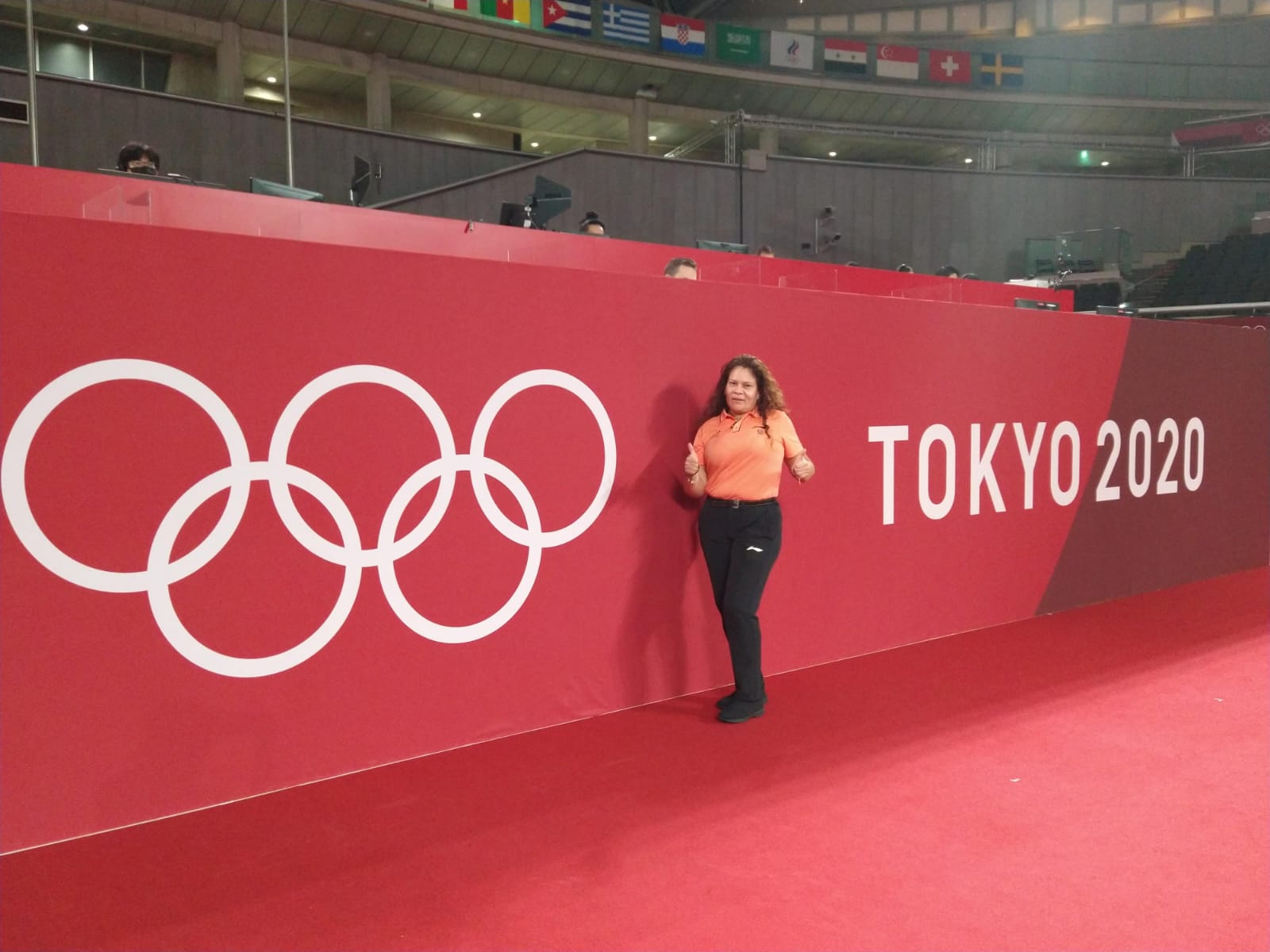
Tokyo 2020 was Diana's first Olympics. COVID-19 turned the Games into something surreal. No spectators. The best matches in the world played in absolute silence. Diana was part of the umpire team for the women's final.
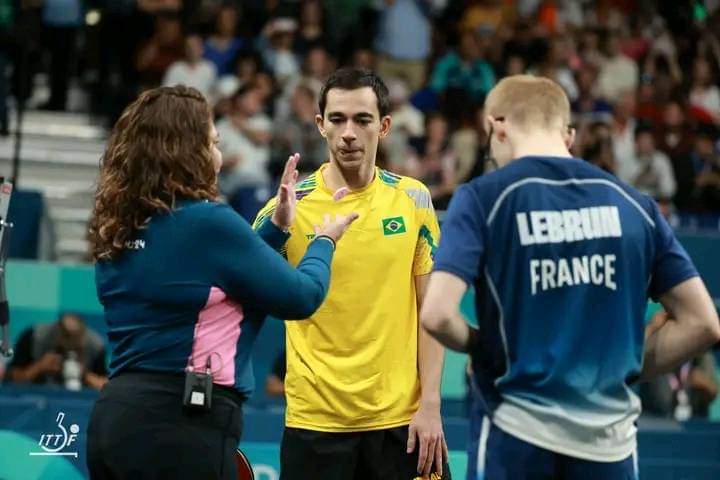
Paris 2024 was a celebration. She was the main umpire for Felix Lebrun versus Hugo Calderano, a French teenager against Brazil's top player, in front of a Parisian crowd.
But the match that stays with her wasn't the biggest stage. It was Alberto Mino from Ecuador against Finn Luu from Australia. Alberto was losing 3-0. He came back to win 4-3. Diana was the assistant umpire. She's known Alberto since he was a little boy. Sometimes, after winning a point, he would look at her. During the comeback, friends in Ecuador sent her screenshots, cheering for Alberto playing and for Diana officiating. A shared moment across an ocean.
"Next question, please," she says when telling this story. "I don't want to cry."
The Friend and the Professional
Umpiring players you've watched grow up is complicated. The sport is small enough that relationships are real. "We all have a heart," she says. "And sometimes we've known those players since they were kids."
But Diana draws a line. Outside the field of play, she's the friend. Inside the 7-by-14-meter court, she's the professional.
"For me, it's more important to be recognized as a professional umpire than as a good friend," she says.
When asked about the hardest call she's ever had to make, she doesn't talk about a controversial point. She talks about the decision to leave her career to travel the world officiating. That was the hard call. Everything after it has been the reward.
Building What Comes Next
Diana doesn't just umpire. She builds. Under federation president Magali Montes, Peru organized eight umpire training courses across the country in a single year. For a long time, there had been none. Diana is personally preparing new umpires to become international officials. One is already involved in the ITTF Dakar Project.
She is also one of eight umpires worldwide selected for a new ITTF racquet testing project, trained in London last year, beginning work at elite tournaments this year, not just officiating at the highest level, but helping shape how the game is regulated.
"Representing your country is one of the greatest dreams when you are involved in sports," Diana says. "I want more Peruvian colleagues to experience that same feeling, seeing your image on the screen with your name and your flag. It's simply amazing."
"What I truly want is to leave behind a new generation of well-prepared umpires who can experience everything I am experiencing, and even more."
The Bigger Picture
Umpiring is invisible until it isn't. Fans watch the players. They follow the ball. They cheer for winners and console losers. The person sitting at the end of the table, making decisions in real time at speeds most people can't follow, doesn't make the highlight reel. But without umpires, there is no match. Without trained, certified, professional officials, the sport cannot grow. In Peru, Diana is proving that umpiring can be a serious path, not easy, not lucrative, but serious, professional, and if you're willing to leave your luggage at a friend's house and take a carry-on to the next city, the adventure of a lifetime.
Still Going
Diana Santome quit playing table tennis at 12. But the sport never left her life. It just moved to the other side of the table.
"What truly motivates me is continuing to be part of this incredible sport and witnessing how it keeps evolving," she says. "Seeing who emerges as the next big revelation and being present at the most important tournaments in the world. That's living a dream come true."
Her father showed her the path. Diana took it further than anyone in Peru ever has. Two Olympics, Blue Badge status, one of eight racquet testers in the world, and now she's making sure the next generation doesn't have to do it alone.
From Lima to Tokyo to Paris, Diana Santome proves that the other side of the table is just as extraordinary as the side with the racquet.
More from Peru
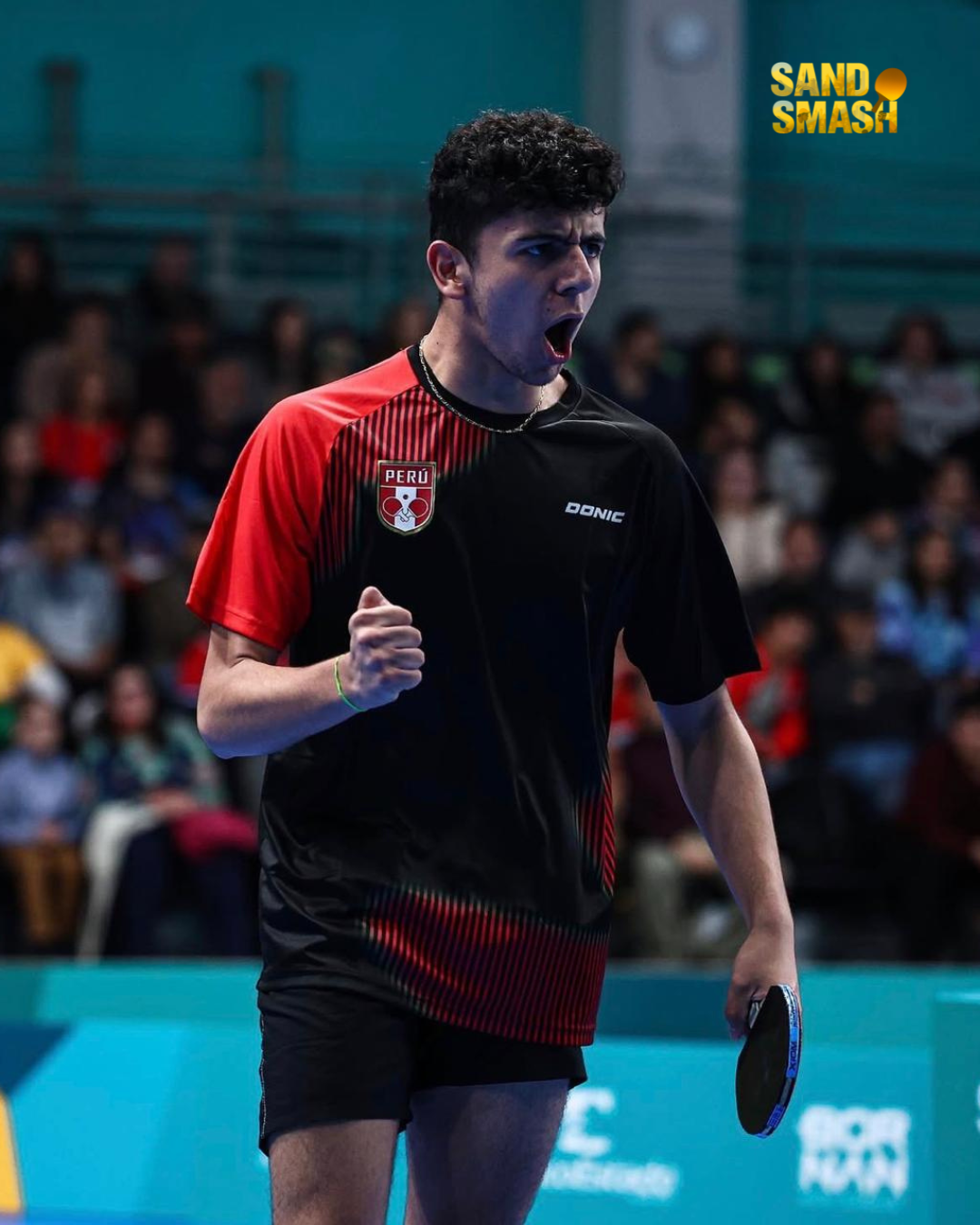
Nano Fernandez: Carrying Peru's Hopes on His Forehand
A champion carrying the dreams of an entire nation on his forehand, Nano Fernandez is Peru's brightest table tennis prospect.
Read More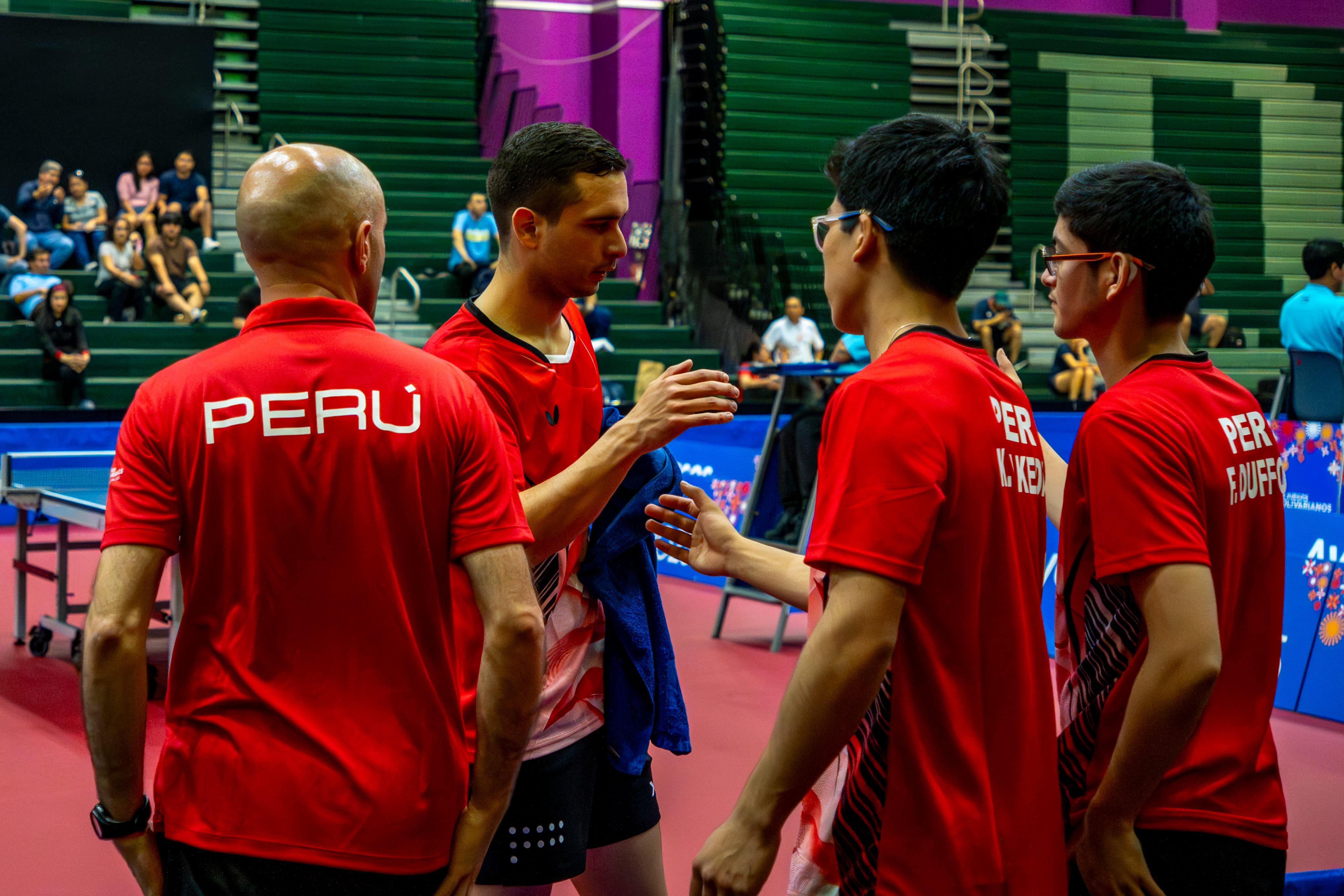
Peru's 24-Year Wait Ends: How Passion, Hard Work, and One Portuguese Coach Changed Everything
From continental drought to gold medal domination—the remarkable transformation of Peru's table tennis team.
Read More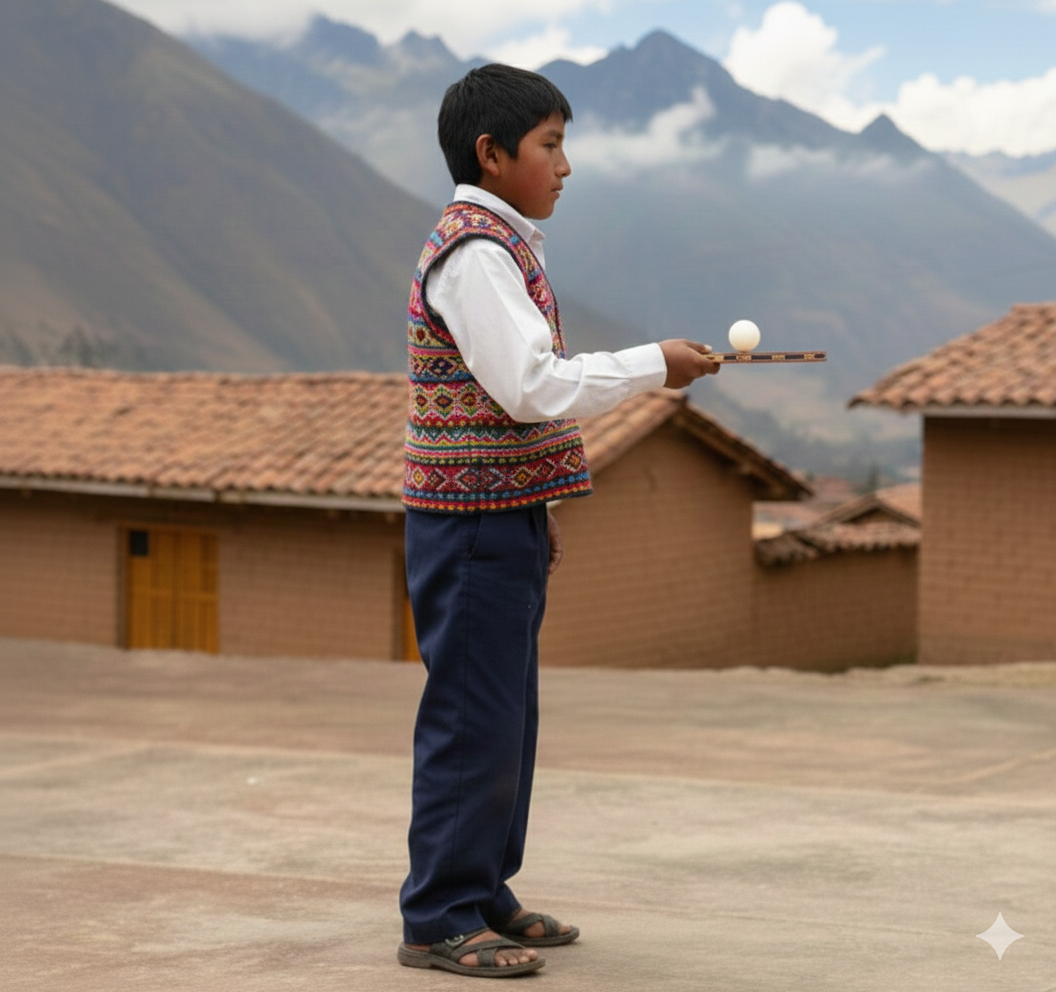
From the Andes to the World: Peru's "Tables of Dreams" Wins ITTF Foundation Grant
How table tennis is transforming rural communities in Peru's highlands through an innovative ITTF-funded program.
Read More— The Dispatch —
Every story, first.
Get the latest table tennis stories, player profiles, and advocacy updates delivered to your inbox.
We respect your privacy. Unsubscribe at any time.