
6:30 AM. Senay Gebregiorgis and his daughter leave home. One hour drive ahead.
Somewhere in Addis Ababa, Derara Mekonen Dufera is already awake. National champion from last year, defending his title. 13 months of training leading to this weekend.
Across the city, Rediet Shimelis is preparing too. Started playing at 11 at a summer camp in her neighborhood. Now competing at nationals.
Three people. One tournament. The next few days will define their year.
This is Ethiopia's National Table Tennis Championships.
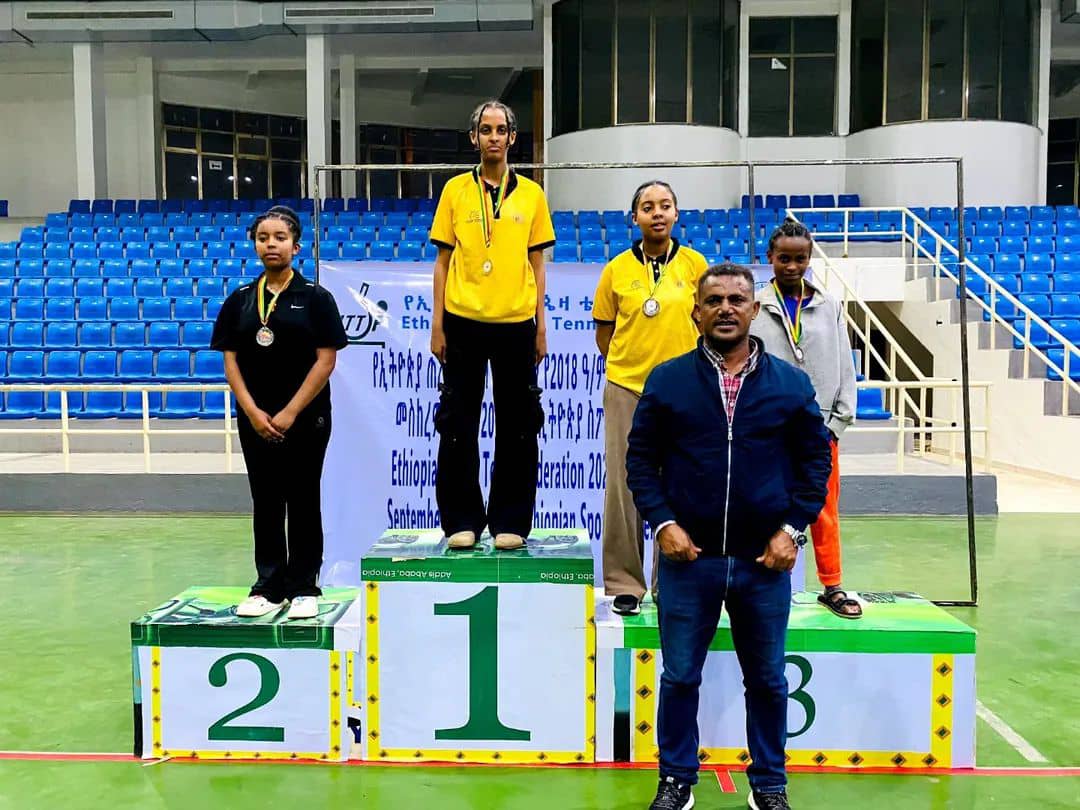
Women's 2024 winners
Competing with What They Have
The venue isn't perfect. Ethiopia is a developing nation, and table tennis infrastructure is still growing. Players work with what they have.
For Derara, the tournament venue and some materials weren't suitable. He wasn't feeling well physically, but emotionally, he was very pleased.
Rediet did her best, but the game hall really bothered her. If she could do the tournament day over again, she would change the hall.
"We don't have enough halls in our country to meet our needs, and I think that needs to change."
- Rediet Shimelis
This is the reality of table tennis in a developing nation. Players adapt. They compete. They win despite conditions, not because of them.
A Father's Hope
In the audience, a few families sit, including Senay Gebregiorgis. Hope takes over his brain and heart. He wants his daughter to succeed and perform her best.
He understands the game well. He's familiar with table tennis rules and strategy, so his support is both emotional and informed.
The few families in the audience are actively building a sense of community for their children. Often, families play table tennis together around compounds to share a common, positive experience.
Senay and his daughter left home at 6:30 AM. One hour drive each way. He has made several sacrifices to support her journey, financially, buying equipment and paying for training. Additionally, he supports her with traveling and is always there to watch the games, which requires a considerable commitment of time.
What's at Stake
At stake is the national title and an honorary cash prize.
The title of "National Champion" in table tennis does not yet carry the same weight as it might in athletics or other more popular sports in Ethiopia. Champions struggle for widespread recognition and respect within the country.
"To tell the truth, table tennis is not well known and respected in our country, so there's not that much recognition and respect."
- Derara Mekonen Dufera
However, the title opens many doors to compete in continental and international tournaments. Derara was able to participate in East Africa regional competitions, African championships, African cups, African club championships, and the ITTF World Championship 2025 in Doha, Qatar. For his career, it is the platform for international representation.
Beyond National Recognition
When Derara won the national championship this year, he didn't tell his parents immediately because they don't live in Addis Ababa. But when he won bronze at the African Senior Championship 2024, the response was different. Not only did his parents congratulate him, but families, relatives, and managers from different companies and clubs called. The community gave him the respect a continental champion deserves.
Whether you get eliminated or win the championship, there's a common theme among Ethiopian players: you gain motivation.
Getting knocked out makes them stronger and better, pushing them to train harder for the next competition. Any prize or reward motivates the champions and encourages them to pursue more.
"Any prize or reward always motivates me and encourages me to pursue other prizes to do more training."
- Derara Mekonen Dufera
"For me, it actually makes me stronger and better to do more training for the next competition."
- Rediet Shimelis
Playing for Love, Not Money
Playing a match is never easy. The emotions are always intense. Especially in a final match, the pressure is immense, not just from the opponent, but also from the supporters.
Senay sees the significant emotional challenge his daughter has to overcome, and he feels that alongside her when she loses a game.
But players in Ethiopia aren't playing for the prize money. They're playing because of the deep love and passion they have for the game. Players bounce back after elimination and fight through challenges because of their love for the sport.
"I believe that the happiness I get from table tennis is greater than money, even if I lose."
- Rediet Shimelis
Balancing Education and Sport
For many youth players, education is the main priority. While families are supportive of table tennis, they try to balance both, but academic success comes first.
Senay hopes that beyond medals and trophies, table tennis will provide his daughter with valuable life skills. It keeps her active, helps her become emotionally strong, and builds her confidence. Crucially, at this early age, it's a wonderful way to keep her engaged in something positive.
The Future: Youth Development
Derara hopes that Ethiopia focuses more on youth development. They are the next generation. He hopes the country focuses on young athletes to develop the sport, supports provinces, and encourages coaches in different regions to work with young players.
Ethiopian table tennis is different from most countries because the style is very traditional. The playing style as a country is more defensive, so it doesn't align with current international table tennis trends.
"That's why working on youth can change this style and improve the sport throughout the country."
- Derara Mekonen Dufera
Champions Made from Passion
Ethiopia is developing. Table tennis is growing. Infrastructure is coming. But right now, players compete with what they have, and they do it with love, hope, and relentless determination.
Derara wins despite unsuitable conditions. Rediet loses but finds motivation. Senay drives one hour each way, fueled by hope.
Three people. One tournament. A few days that define a year.
This is Ethiopian table tennis, where champions are made not because of perfect facilities, but because of perfect passion.
From early morning drives to national championships, from unsuitable venues to international dreams, Ethiopian players show that with love, hope, and determination, anything is possible.
— The Dispatch —
Every story, first.
Get the latest table tennis stories, player profiles, and advocacy updates delivered to your inbox.
We respect your privacy. Unsubscribe at any time.