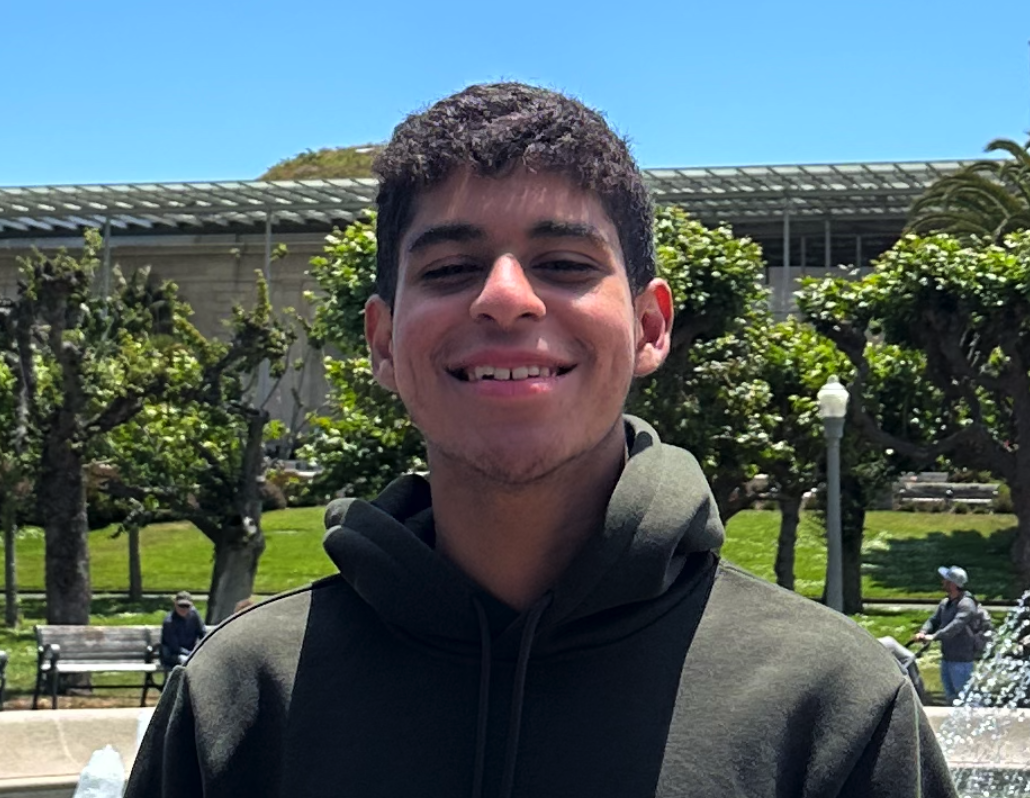
Unisa Sesay is 21. He is the number one table tennis player in Sierra Leone. He has won the national championship nine times. The last one was April 4 and 5 of this year.
He lives alone.
His father died 12 years ago. His uncle brought him from the village to the city seven months ago. Then his uncle died. The family closed the door behind him. He found a place. He pays for it himself.
He pays for it with carpentry. He does not have his own shop, so he pays to use someone else's — he goes in when school is out, makes doors, wardrobes, PVC fittings. The money covers his school fees, his clothes, his food, his rent. What is left, he sends to his mother in the village.
This is a day in his life.
Morning
Rice for breakfast. He prepares it himself.
Then school. He is 21 and still in school, still showing up.
After school, he works. After work, he trains.
The Work
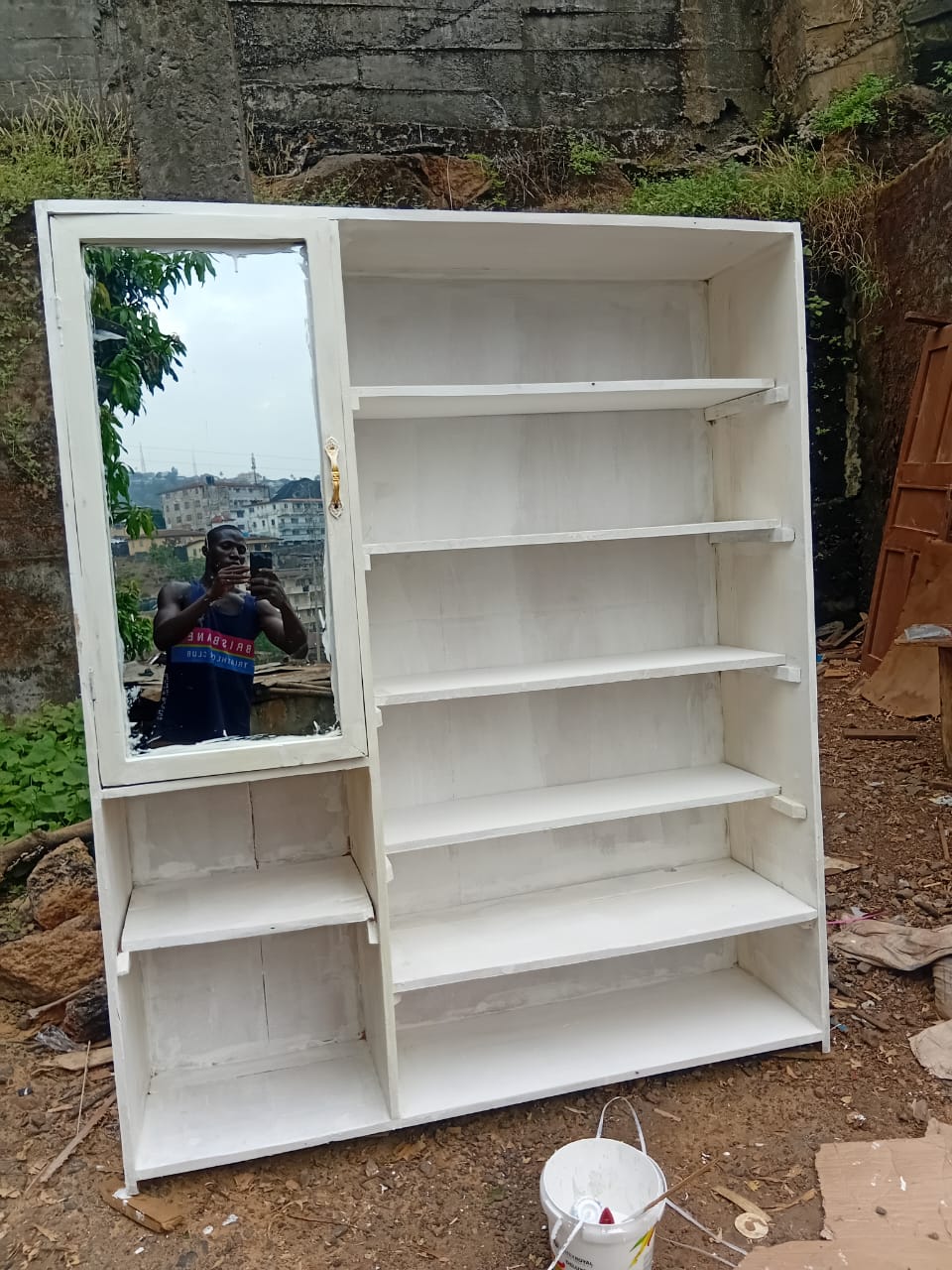
The carpentry shop is not his. He rents time there after school ends. He makes doors, wardrobes, and PVC fittings — whatever is needed. The work is physical and precise, the kind of work that requires patience. He has learned that patience carries over. It shows in his footwork. It shows in how he handles pressure on the table.
He does not talk about the carpentry as a burden. He talks about it as the thing that makes everything else possible.
The Venue
Training is from 5 to 6:30 PM, four days a week.
Sierra Leone's players used to train at the National Stadium. The government has been renovating it for three years.
So Unisa trains at YSC Club. A Lebanese man owns it. The space is a hall — three tables, two bathrooms, about fifteen bulbs in the ceiling. The hall hosts weddings and parties when the owner books them. On those days, the players push the tables against the wall. The next morning, before the session starts, they put them back themselves.
The man who connected Unisa to YSC was Mr. Price, an SLTTA member. He died last month.
Sometimes the Lebanese owner gives Unisa 20 leones for transport home.
The Session
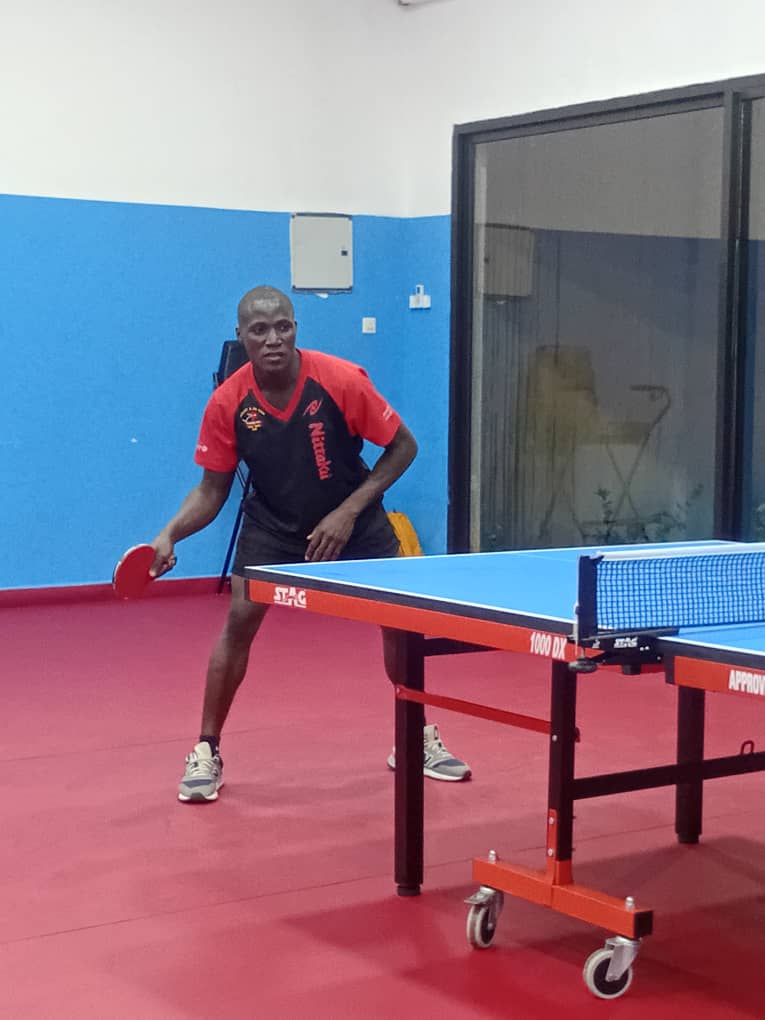
Stretching. Skipping rope. Footwork. Push-ups. Then the table.
He plays shakehand, right-handed. His blade is a Tibhar Force Pro. His rubbers are Donic.
“We don't have table tennis equipment in Sierra Leone. We suffer a lot to have a good rubber, a good bat. One bat we use for one to two years.”
— Unisa Sesay
A Tenergy 05 rubber costs about $80 in Egypt. Most professional players in Europe and Asia replace their rubbers every few months. Unisa's blade has to last one to two years.
The training block is structured: forehand, backhand, serve and attack. His coach is Sully. Sully has played the sport for about 20 years and has been coaching Unisa for the last ten. Right now they are working on his backhand and his serve.
Five players started training in Sierra Leone before Unisa did. He came late. He passed them.
“I came later and made up my mind to be among them. Today I am the first. Thank Allah for that.”
— Unisa Sesay
The Hardest Part
I asked him what the hardest part of his training day is. I expected an answer about footwork or focus.
“Physical. Because sometimes you need to eat first and rest for 30 minutes before going for training. But sometimes there is no food. I just go for training.”
— Unisa Sesay
If he has money, he buys bread on the way. If he doesn't, he goes anyway.
Closing the Gap
The five players who started before him are still around. He has passed them. After that, the depth thins.
He has played one tournament outside Sierra Leone. Ghana, 2019. Seven years ago. Nothing since.
The gap between Unisa and the rest of Africa is not talent. It is exposure. He has not trained with a national team player from a top program. He has not done a camp in Europe or Asia.
He knows what he needs.
“We need more support. We need to take part in African tournaments every year, for us to have more mind. Having training in China, like one or two months.”
— Unisa Sesay
More mind. That is how he says it. He is the best player in his country and has nothing to measure himself against.
After the Table
Training ends at 6:30. Unisa goes home. He finds food. He does his homework.
Then he opens YouTube and studies serves.
“I do research on YouTube to learn more serves.”
— Unisa Sesay
Coach Sully is not on call at 9 PM. The next day's session is already on his mind.
Before Sleep
“I think a lot about the moves I did when training. The next day, I try to adjust all the moves I did.”
— Unisa Sesay
He goes through the session in his head. He finds what didn't work. He plans the correction. He sleeps. He wakes up. He does it again.
The Country
Sierra Leone has roughly 80 table tennis players. The Sierra Leone Table Tennis Association does not have an office. The annual national tournament exists because the Chinese Embassy writes a check. The president before this one resigned because he was made to feel unwelcome. The one before that died.
This is the system that produced Unisa Sesay.
“We are the smallest sport in Sierra Leone, in terms of numbers.”
— Unisa Sesay
He didn't bother comparing to football. Just answered in five words.
The Last Thing
At 6:30, the players pack up. The owner has a wedding to set up for. The tables go against the wall.
Unisa walks home. He finds food. He does his homework. He opens YouTube.
The serve he is learning tonight is one his coach cannot teach him. Coach Sully is good. Coach Sully has been with him for ten years. Coach Sully is not in Tokyo, or Düsseldorf, or Beijing. Nobody in Freetown is. So Unisa watches a Chinese player serve in slow motion at 11 PM and tries to understand what the wrist is doing.
Then he goes through the session in his head. He finds what didn't work. He plans the correction. He sleeps.
Tomorrow there is school. After school, the carpentry shop. After that, training. The wedding hall, or the road home. Rice, if there is rice. Bread, if there is money.
He is 21. He is the best player in his country. He is teaching himself.
Nine-time national champion. No training support. No international exposure since 2019. Still showing up — school, carpentry shop, table, YouTube, sleep, repeat.
More from Sierra Leone
Sierra Leone · Development
No Office, No Venue, No Funding: The Fight to Keep Table Tennis Alive in Sierra Leone
— The Dispatch —
Every story, first.
Get the latest table tennis stories, player profiles, and advocacy updates delivered to your inbox.
We respect your privacy. Unsubscribe at any time.