
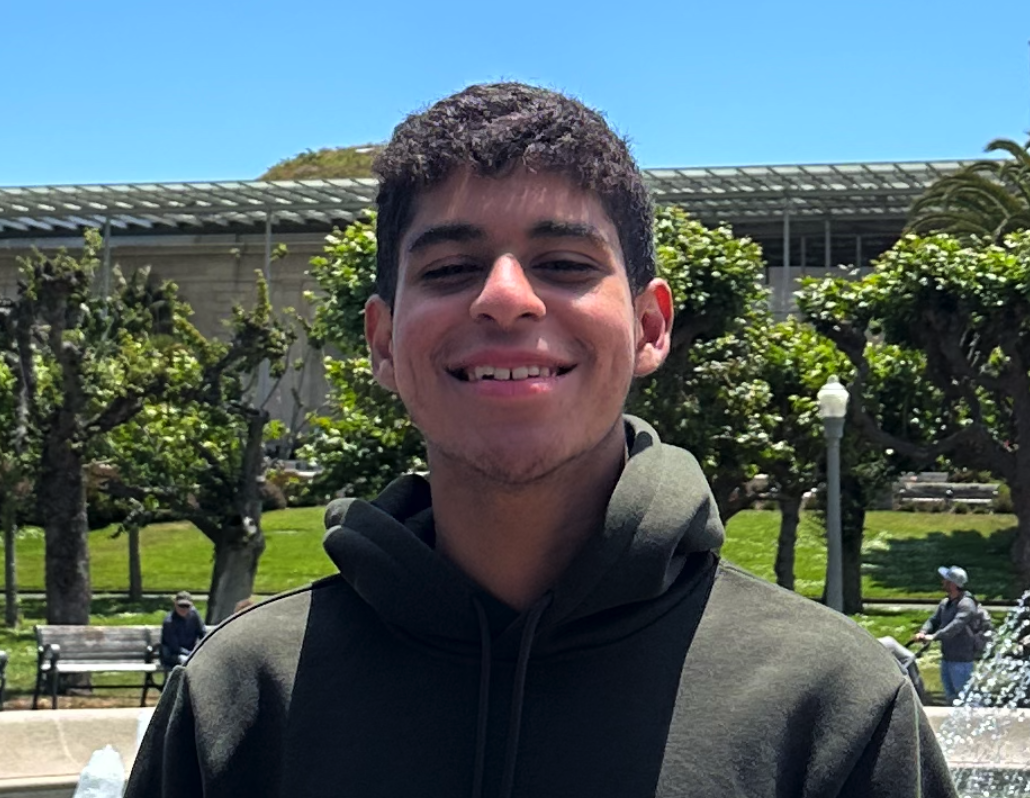
Josué and Caleb Portalatino live 800 meters from their training center. A five-minute taxi ride. Everything they need to practice is right there.
They also live 14 hours from every tournament that matters.
That's the math of junior table tennis in Peru. Lima is where the national tournaments happen, where the pre-selection camps happen, where the coaches live, where VIDENA is, where the federation is. For a family in the provinces, serious competition means paying for the bus, the hotel, the food, the missed work, and then paying again the next month.
I spoke with four fathers. One in Lima. One in Chiclayo, in the north. One in Ica, five hours south. One who lives in the capital but still makes almost every sacrifice the others do. Every one of them said the same thing, in different words: this isn't one parent's work. It's two. Four families. All doing the same job. Building a national-level athlete out of their own pocket, in a sport that's still building its place in Peru's sporting priorities.
The Numbers
Magali Montes, president of the Peruvian Table Tennis Federation (FDPTM), estimates that 40 to 50 percent of Peru's competitive junior players in the U-11, U-13, U-15, and U-19 categories are based in Lima. The rest are spread across the country.
Last year, FDPTM ran three macro-regional tournament circuits — north, center, south — so provincial players wouldn't have to come to Lima for every competition. The federation built out Raquetitas del Futuro, a development program for under-10s running in three provinces. It trained more than 150 new umpires in nine courses across Peru, so tournaments outside Lima could be officiated locally. In para table tennis, Magali hired a coach for the south and is arranging one for the north.
The main barrier, she says, is money to place qualified coaches in every region. The federation has paid out of its own resources. Sponsors haven't materialized yet. Magali is still looking.
"We have not had any case yet that a kid that qualify for a tournament dont go because of not having resources."
— Magali Montes
Magali played competitively herself, four decades ago.
"To be a champion in Peru, you need a parent that supports you in all senses."
— Magali Montes
She says it was the same when she played. Forty years, same arithmetic.
These four families are part of the reason that record holds.
"You Need a Strong Wallet"
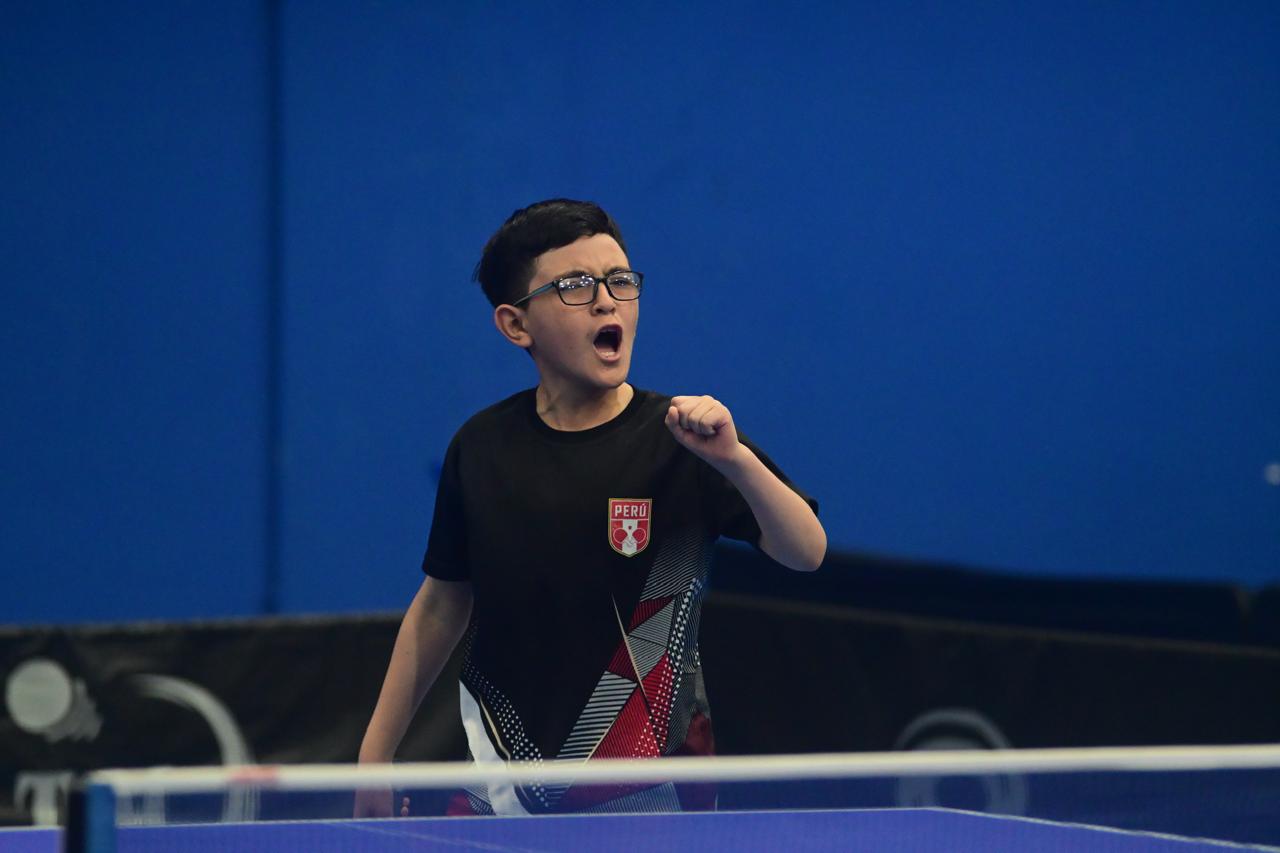
Samín Salvador Lora Morales — gold and two silvers at the 2026 Paraguay Contender, age eleven.
Cesar Lora's son is eleven. His name is Samín Salvador Lora Morales, and in 2026, at the Paraguay Contender in Asunción, Samín won gold in U-11 mixed doubles, silver in boys' doubles, and silver in U-11 singles.
Cesar is a professional chef. He prepares every one of Samín's meals, including the dinner Samín sometimes eats in the car on the way home from training, so he can keep studying on the drive. Samín trains three hours a day at VIDENA. The family recently moved him to a school closer to the training center to cut the commute. They no longer have school transportation. They no longer have help at home.
"A lot, a lot, a lot" is how Cesar describes what the sport costs. Private tutors. Private school. Travel, local and international. The Lora family funds all of it. At eleven, Samín is four years away from qualifying for any state athlete stipend.
Cesar's worst moment as a parent didn't happen at a tournament. It happened around one. A coach from another academy told Samín, in front of people, that he had won a match by luck. That night, Samín came down with a fever and a headache. The next day, he asked to compete anyway. He won. Cleanly. And he still had to carry what someone whose job is to shape young athletes had told him the day before.
"A coach's role is to build human beings, not break their confidence."
— Cesar Lora
When I asked what he'd tell a parent whose child is thinking about getting serious, Cesar's answer was six words.
"You need a strong wallet… or strong sponsors."
— Cesar Lora
The Spot She Lost
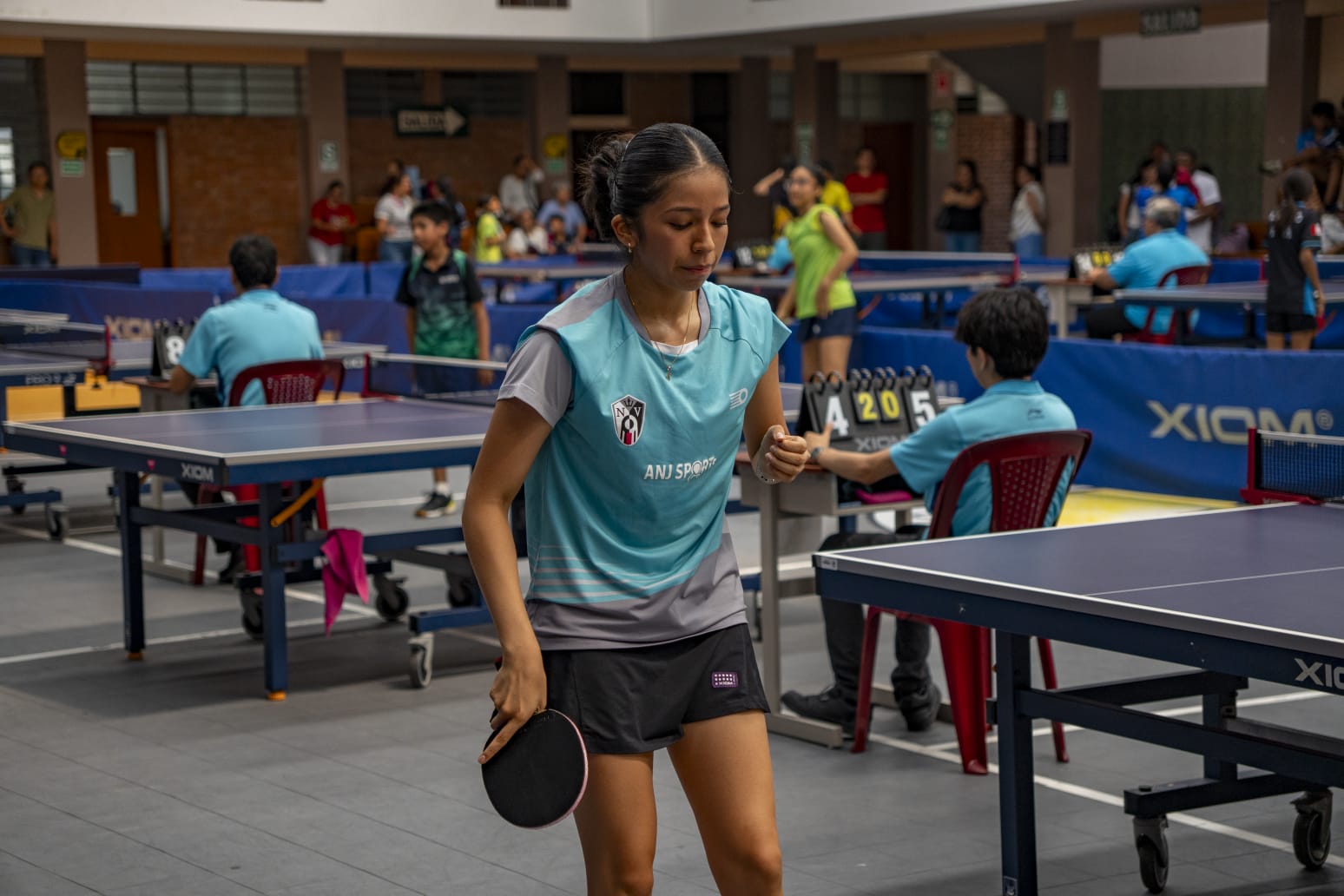
Kiara Tafur — fifteen, Peru's U-19 national team. Cut from the U-11 squad. Came back and won the U-13 national championship in 2022.
Kiara Tafur is fifteen. She plays for Peru's U-19 national team. She started table tennis at five years old.
Her father, Johnny Tafur, walked me through her day. School from 7:30 AM to 4:00 PM. Training at VIDENA with head coach Francisco Santos until 8:00 PM. Dinner her mother prepares. Homework, whenever there's time left. When Kiara prepares for a major tournament, the family moves in with Johnny's mother, who lives closer to VIDENA, so Kiara doesn't spend two hours a day in Lima traffic.
Years before any of this, Kiara lost her place on the U-11 national team. The spot, Johnny says, had been her biggest dream at that age. Her level hadn't dropped, but the anxiety of the loss followed her into every subsequent match. She would lose, then lose again. After one early-round elimination, her parents sat her down. Johnny told her she had to decide: if she still believed in herself and still loved the sport enough to start over, they would support her. The last thing they wanted was for table tennis to make her suffer.
She answered:
"Yes, I want to continue in table tennis, and I know I can achieve much more."
— Kiara Tafur
With professional help, she rebuilt. In 2022, she became U-13 national champion. She has qualified for every national team since. At the end of that year, she told her father:
"Dad, thank you for believing in me. I've achieved what I set out to do."
— Kiara Tafur
Peruvian sports policy classifies an athlete as "high-performance" starting at fifteen. Before that, federation financial support is limited. Parents cover everything, even when their child is already representing the country.
"If there is anything we must change as a country, it is above all in the state's sports policy, so that it can promote and finance athletes from an early age. Not wait until they reach fifteen."
— Johnny Tafur
Two Brothers, 14 Hours to Lima
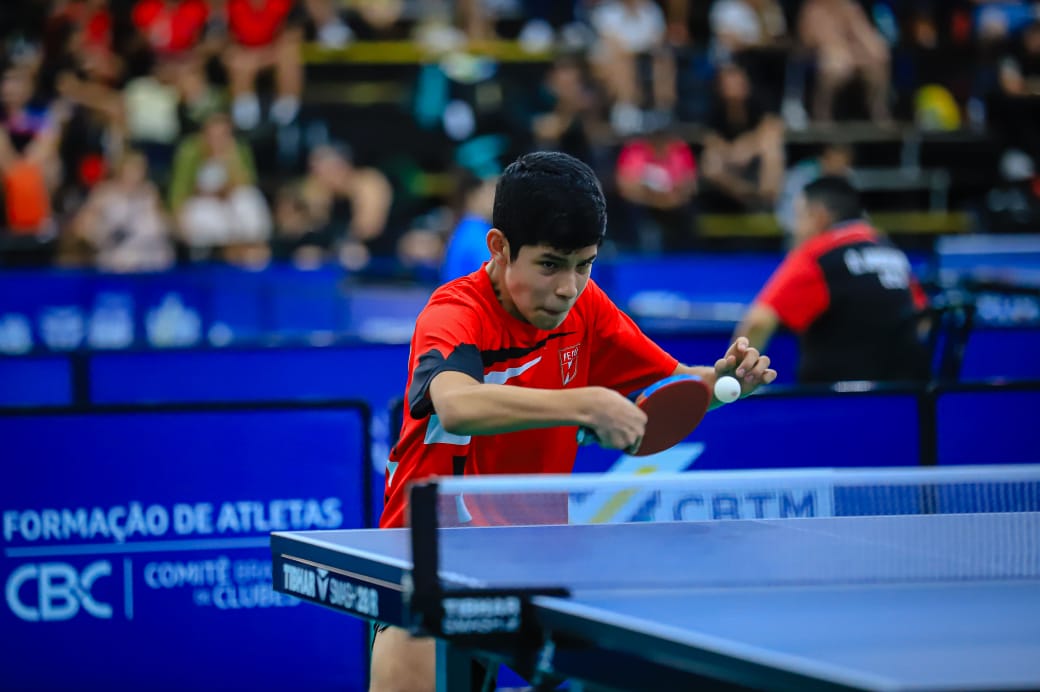
Josué Portalatino — U-15, Pimentel.
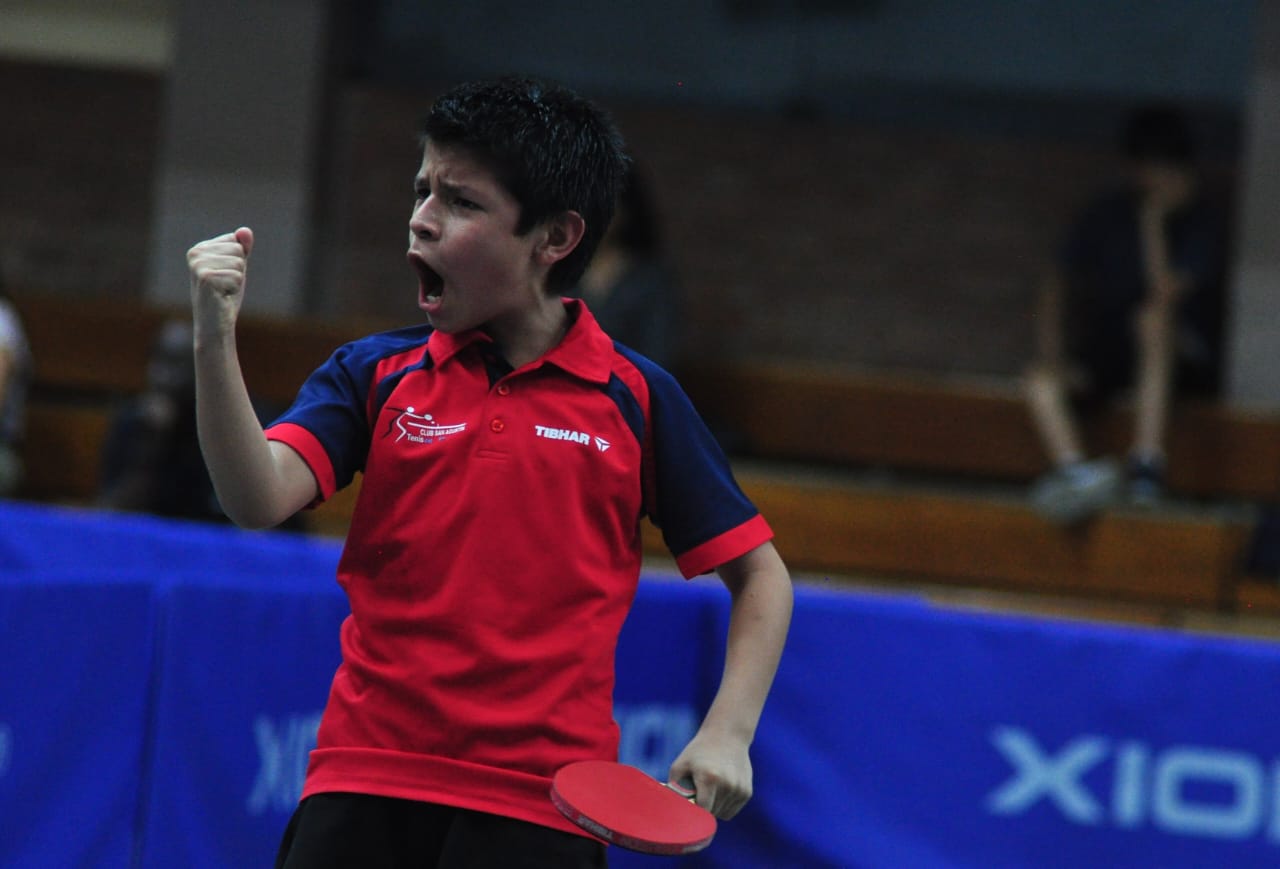
Caleb Portalatino — U-13, Pimentel.
Rodolfo Portalatino has two sons. Josué is U-15. Caleb is U-13. They live in Pimentel, in Lambayeque, in the north. Their training center is their school. 800 meters from the house.
The national tournaments are in Lima. Every time either brother qualifies for one, the family organizes an overnight 14-hour bus, then accommodations near the venue, then meals timed around the tournament schedule. "It involves a very complex set of activities," Rodolfo says.
He and his wife have considered moving to Lima. Both have jobs in Chiclayo. The cost of living in the capital is significantly higher. They stayed.
Yes, he says, his sons start every competition at a disadvantage. The travel cuts into training time. The rides fatigue the body. They compete against Lima-based players who were at VIDENA the day before.
FDPTM helps where it can — hostel housing during pre-tournament camps, coordination with the boys' school so they can make up missed exams. The local government has never provided anything, despite repeated requests. Private individuals and small companies have covered trip expenses over the years. Without them, Rodolfo says, participation would have been difficult.
What worries him most is what happens next. The boys' club exists inside their school. When they graduate, they lose it. If they want to keep playing seriously at university, they'll need to find another club, probably in another city. Probably not Pimentel.
Five Hours South
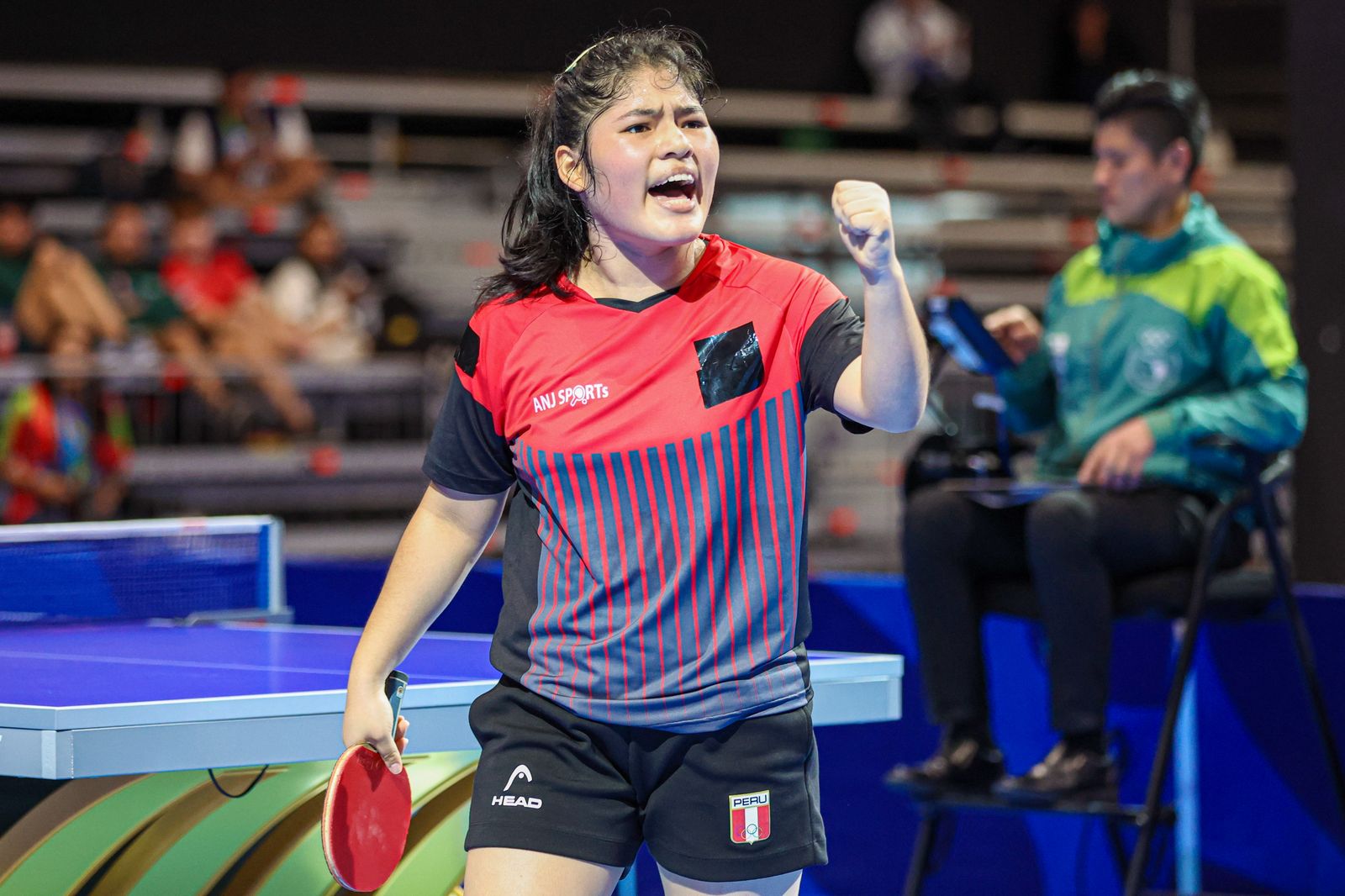
Natzumi Aquije — bronze with the women's team at the 2025 Bolivarian Games. Now leaving competitive table tennis to study medicine.
Jesús Aquije lives in Ica, five hours south of Lima. His daughter, Natzumi Aquije, is one of Peru's top female players. She won bronze with the women's team at the 2025 Bolivarian Games. Jesús trained her himself from the age of six and a half until she was twelve.
Ica has one table tennis academy. One coach. No local competitions. No regional competitions outside of school championships. The academy is a ten-minute taxi ride from their house.
At thirteen, Natzumi joined the national team. FDPTM began providing her with housing at VIDENA during training camps. Jesús and his wife both work for the state in Ica, which means every tournament requires work permits, shift changes, hours to make up. Sometimes they can travel with her. Sometimes they can't.
For national-level competition, Jesús says, she's well prepared. For international competition, the gap shows. Training in Ica and training at VIDENA with Francisco Santos are not the same thing.
Natzumi received the Peruvian government's PAD stipend — 1,450 soles a month — for two years, the support that gets removed if you stop winning Pan American medals. Local government support in Ica: zero. This year, a sponsor started providing some equipment.
This year, Natzumi is moving to Lima for university. Not for table tennis. For school. She decided to study human medicine, which requires dedicación máxima, which pulls her away from high-performance sport.
"Hoy mi hija está viajando a Panamá para los juegos sudamericanos de la juventud en tenis de mesa. Quizás sea una de sus últimas participaciones internacionales."
["Today my daughter is traveling to Panama for the South American Youth Games. It may be one of her last international appearances."]
— Jesús Aquije
The moment Jesús remembers most clearly isn't the Bolivarian bronze. It's her first trophy, at seven years old, at the Copa CP Juan XXIII in 2016. Ese fue el punto de partida de esta larga travesía. That was the starting point of this long journey.
Zero
Magali Montes told me that no Peruvian child has yet missed a tournament because the family couldn't afford to go. Zero.
It's the kind of statistic that sounds like good news until you think about what it actually means. It doesn't mean the money is there. It means the federation has absorbed the gap. It means parents have absorbed the gap. It means private donors in Chiclayo, school administrators in Pimentel, grandmothers in Lima, and fathers who pack lunchboxes at 6 AM have absorbed the gap.
Zero is a number the federation is protecting, not one the system has produced.
Zero is what's on paper. Underneath it are four families, a federation stretched thin, and a short list of donors who said yes this year.
Cesar, Johnny, Rodolfo, and Jesús are all, in their own way, carrying the weight that keeps that number where it is. They didn't sign up to be the infrastructure. They became it because the alternative was watching their children's talent run out of runway before the country had a chance to catch up to it.
Magali is still looking for sponsors. The four families are still paying. The number is still zero.
For now.
Four families. Four cities. One country still learning that its table tennis doesn't end at the edge of Lima.
More from Peru
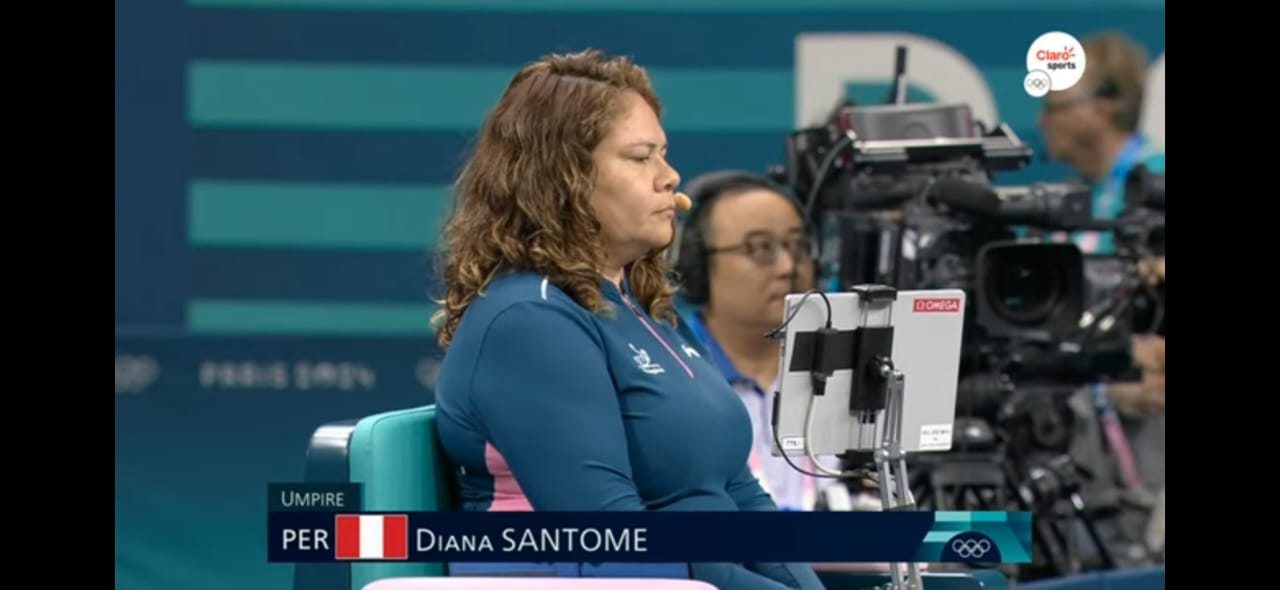
The Other Side of the Table: Diana Santome's Journey from Lima to the Olympics
Peru's only Blue Badge umpire on Tokyo, Paris, and the match that still gives her goosebumps.
Read More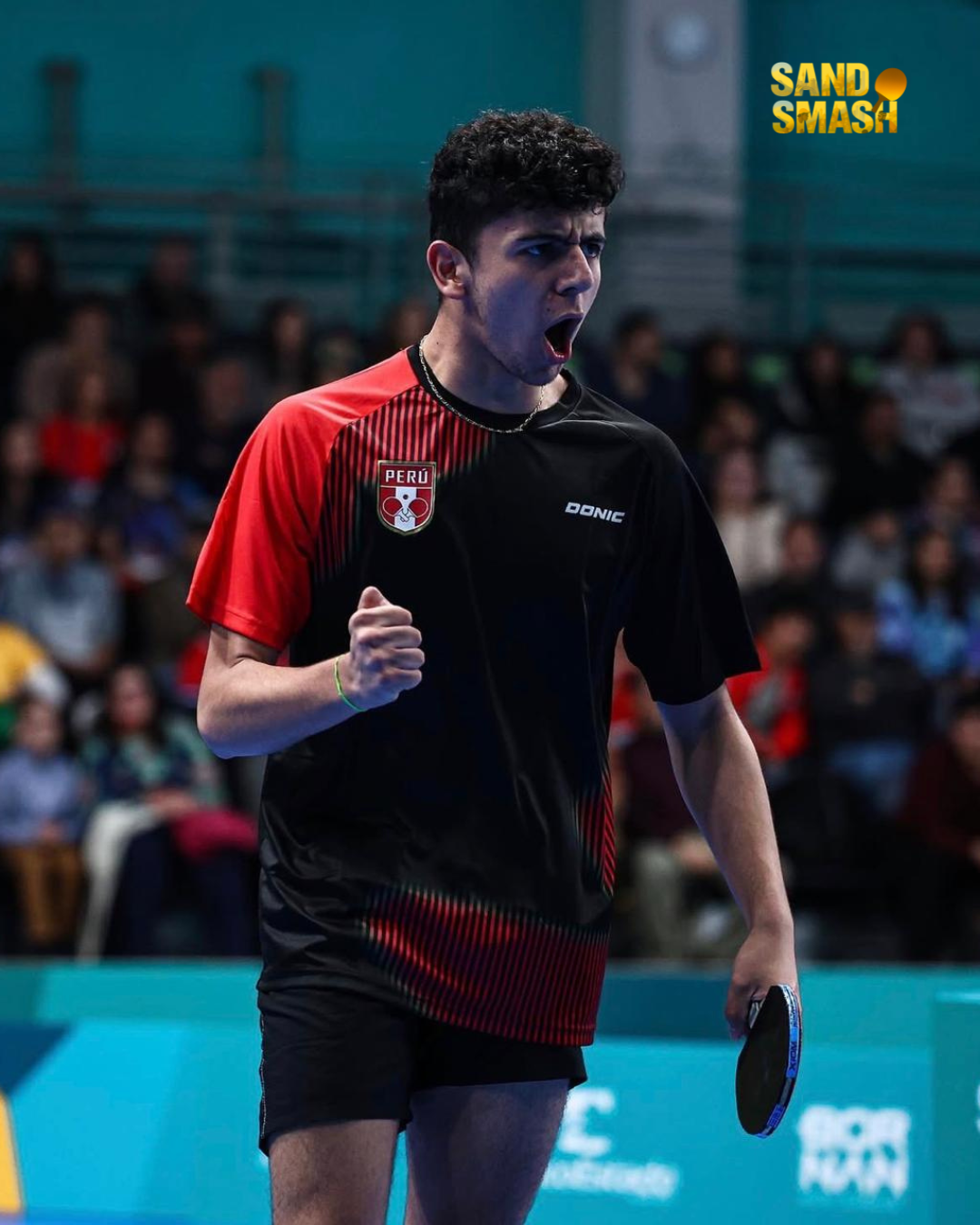
Nano Fernandez: Carrying Peru's Hopes on His Forehand
A champion carrying the dreams of an entire nation on his forehand.
Read More
Peru's 24-Year Wait Ends: How Passion, Hard Work, and One Portuguese Coach Changed Everything
From continental drought to gold medal domination — Peru's remarkable transformation.
Read More— The Dispatch —
Every story, first.
Get the latest table tennis stories, player profiles, and advocacy updates delivered to your inbox.
We respect your privacy. Unsubscribe at any time.