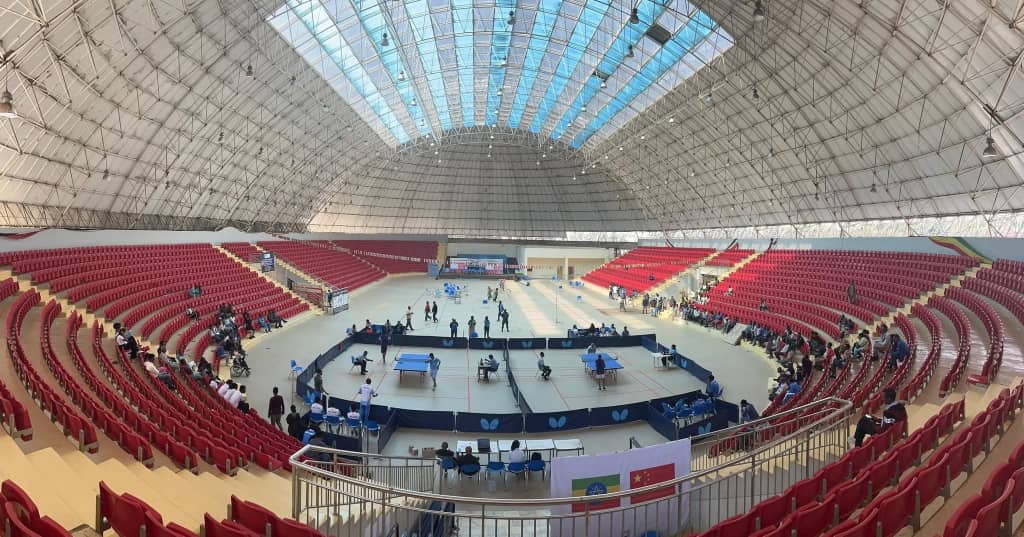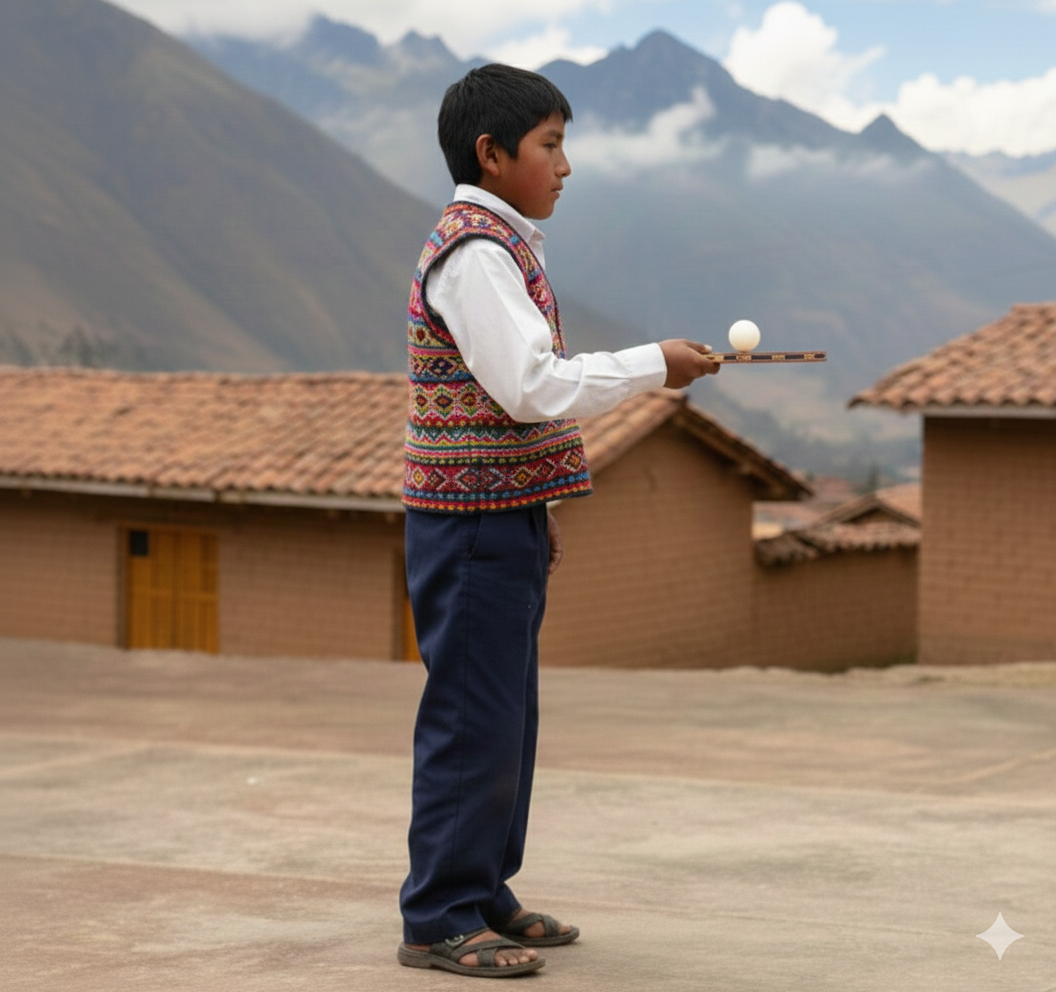
2019. One old table. Worn-out rackets. A handful of balls. An open space with no roof and no proper flooring. And a global pandemic about to shut the world down.
This is how Ping Pong for Children Ethiopia started.
Daniel Tadesse didn't plan to become a youth coach. He wanted to be a world-class player. He pushed himself for years, representing Ethiopia, playing for the Commercial Bank of Ethiopia club, chasing the dream every competitive player knows. But the challenges were immense, and the absolute top stayed out of reach.
So Daniel made a decision. If he couldn't be the best player Ethiopia ever produced, he'd build the path for someone who could.
Starting from Nothing
The early days were brutal. COVID-19 made gathering players nearly impossible. Training in an open-air space meant sessions depended on the weather. Convincing parents that their children should spend time hitting a small white ball was its own battle.
"We started with very little. One old table, worn-out rackets, and a few balls."
- Daniel Tadesse
The first breakthrough came from the ITTF Foundation: 30 professional rackets, 72 balls, and 10 shirts. It doesn't sound like much. But for a program running on nothing, it was everything.
"Seeing the joy and motivation this gave the children made me realize that with the right support, we could achieve something far greater than I had ever imagined."
- Daniel Tadesse
Over 100 children have passed through the program since 2019. Today, 30 active players train six days a week. Monday is the only rest day. The cost for families? Zero. The program is 100% free.
Building the Next Generation
The group that started as Under-13 players has matured into Under-19 competitors. This year, Daniel launched a new Under-13 group, led by one of his senior players who transitioned into coaching, to keep the pipeline moving.
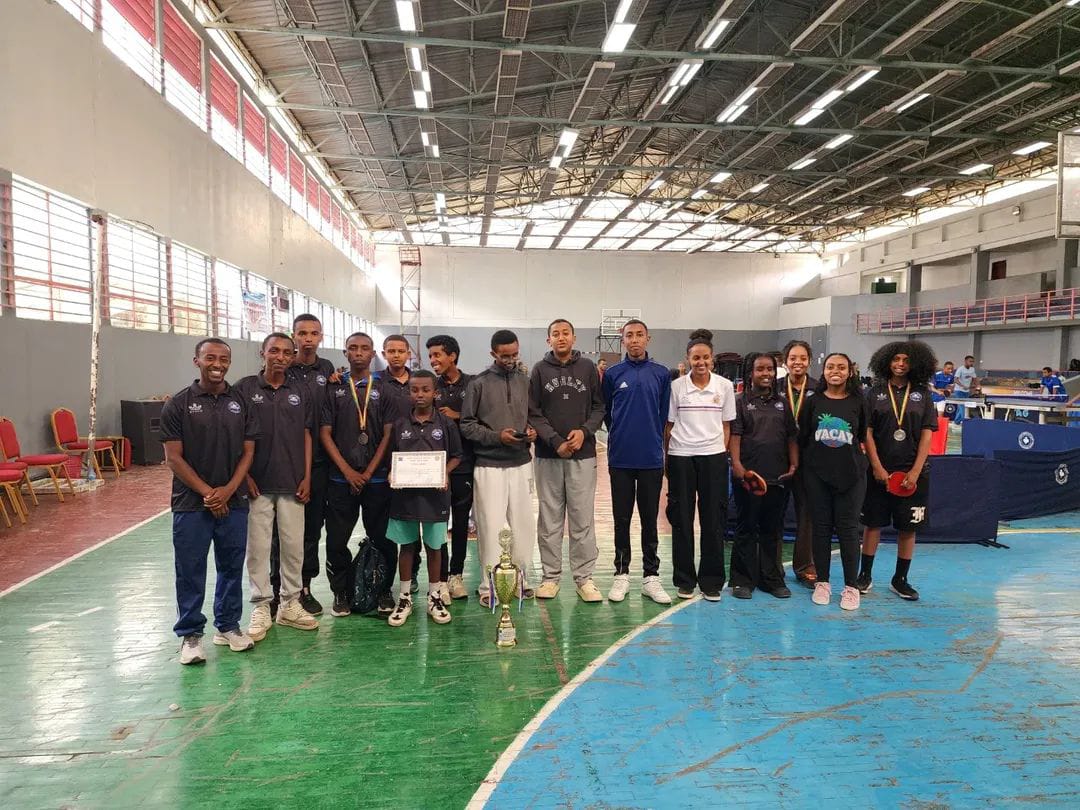
The Under-19 group that grew from the original Under-13 program
More Than Backhands
Daniel is not just teaching table tennis. He's an International Umpire, a Regional Competition Manager, and a member of the ITTF Africa Media Committee. He holds a degree in Computer Science and works as a Data Analyst. He brings all of that into how he runs the program: structured, analytical, professional.
But what he sees in the children goes far beyond technique.
"The transformation is holistic. Beyond their backhands and forehands, I see improvements in self-respect, mutual respect among peers, communication skills, and self-confidence. They are learning how to manage the stresses of life through the pressure of the game."
- Daniel Tadesse
His players are maturing faster than their peers. Through the sport, some have started earning their own income through clubs. They travel alone for competitions. They develop communication and social skills that their classmates don't have yet.
When Daniel registers new kids, he aims for an equal split: five boys, five girls. They come from diverse cultures, religions, and backgrounds. When they step up to the table, those differences disappear.
"They unite through the sport, which is exactly the harmony I want to foster in our society."
- Daniel Tadesse
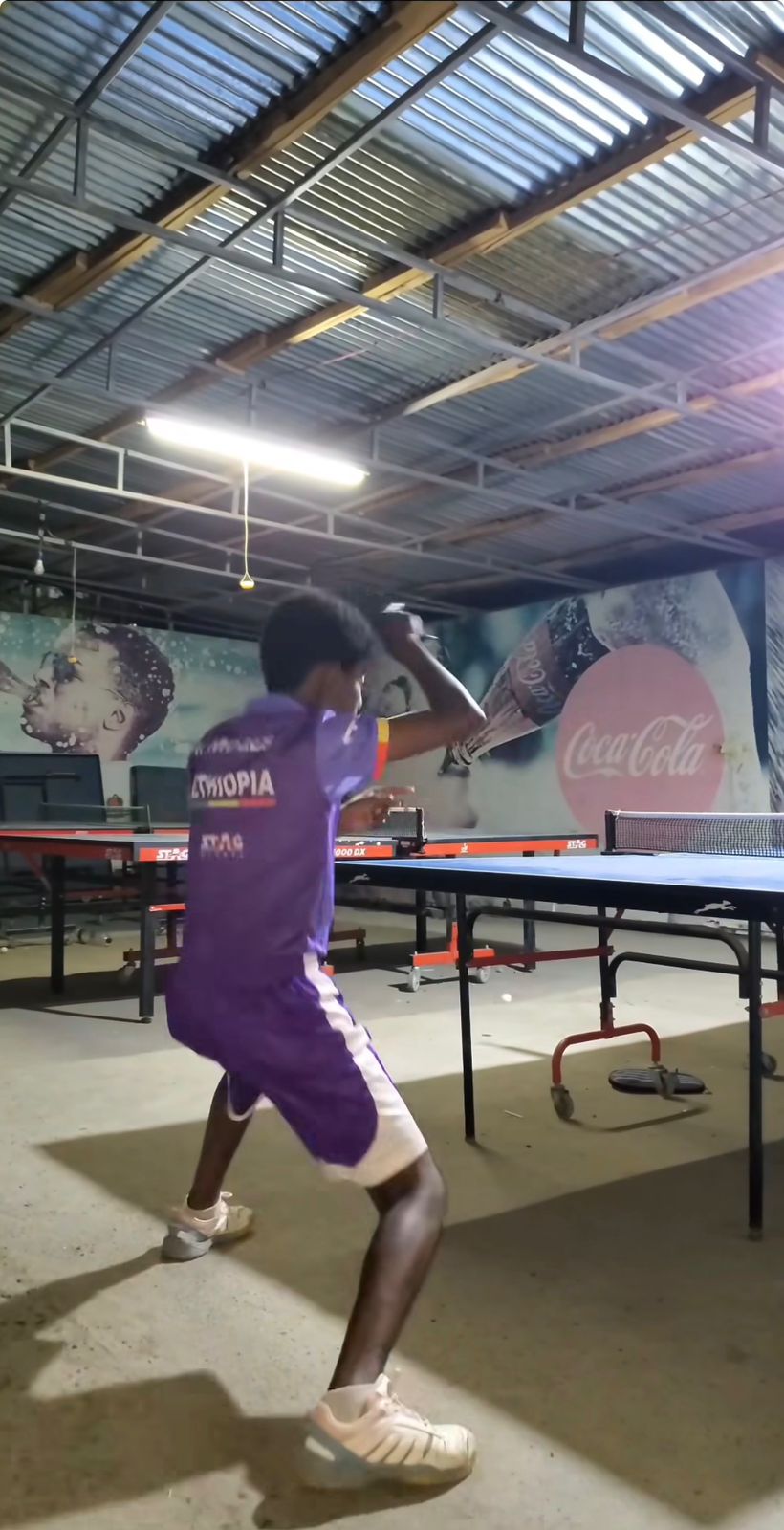
A young player trains at the program's facility in Addis Ababa
Bitaniya
Bitaniya Senay is 15. She heard about the program from a friend who told her to try ping pong. She said why not.
Her first day, she was scared to walk in. Her friend insisted. The kids and the coach made her feel welcome. Four and a half years later, she's still there, and she's won most of the tournaments she's entered.
What changed? Everything.
"I have been more confident in myself. I started making decisions on my own, became more socialized, more friendly, more respectful to others and their decisions."
- Bitaniya Senay, 15
Her role model is Hana Goda, the Egyptian prodigy who won titles at an early age. Bitaniya admires her playing style, her confidence, the way she pushes herself to be better every single time.
"Ping pong for me is an opportunity to become the best of myself while having fun. Every match is a puzzle to me, and every practice is a chance to grow stronger and smarter and be more connected to the game I love."
- Bitaniya Senay
When she started, there were only five or six girls. She remembers all of them hitting the table together. A small but mighty crew. A little community within the project, learning, laughing, and improving side by side.
Being a girl in Ethiopian table tennis means a lot to Bitaniya. "It's like stepping into a space of equal opportunity. It's a place where I can prove to myself and others that girls can compete, excel, and shine in table tennis." The community has been welcoming and supportive. For her, it's more than a sport; it's a platform to inspire, socialize, and show what's possible.
Will she keep playing?
"I plan to play for life. Whether as a professional or just a lifelong player, ping pong has become part of who I am. I just can't imagine myself without the sound of the ball, the focus or excitement of the competitions, and the fun of the game."
- Bitaniya Senay, 15
She's 15.
Biruk
Biruk Alex is 14. Same story, different details. Friends told him about the program. He liked sports. Ping pong looked fun and challenging.
His biggest challenge? Learning to control spin and stay calm during tough matches. His role model? Wang Chuqin. His proudest moment? Competing in tournaments and seeing how far he's come from where he started.
His friends at school think it's cool. Some asked him to teach them.
Biruk's answers are shorter than Bitaniya's. He's 14. But the pattern is the same: discipline, patience, confidence, focus under pressure. The sport is shaping him the same way it shapes every young player who sticks with it.
"Ping pong means a lot to me. It's not just a sport. It's something that helps me grow and challenge myself."
- Biruk Alex, 14
The Challenges That Don't Go Away
Equipment. Always equipment.
Balls are expensive and hard to find in Ethiopia. This limits the program's ability to do multiball training, which is essential for rapid player development. Daniel's players rely on donations from the association, clubs, and national team players. A cycle has formed: experienced players who now earn salaries from professional clubs buy new gear and donate their old blades and rubbers to the beginners.
It's beautiful. It's also not enough.
"In our society, some people find it hard to believe that someone would do all this for free. They assume I must be gaining some hidden financial benefit. But my only benefit is seeing the kids succeed."
- Daniel Tadesse
The Dream
Within the next year, Daniel wants to build a mini-library inside the venue so kids can study between sessions. In five years, he wants multiple branches across the city and the country. Eventually, across borders.
And if resources were unlimited?
"I would build professional venues for training and international competitions and create sustainable career opportunities for coaches, umpires, and players so they can live a dignified life through the sport."
- Daniel Tadesse
He dreams of a world-class facility with dozens of tables, where Ethiopia could host WTT events and World Championships. It's a big dream for a program that started with one table and no roof.
But then again, over 100 children have already walked through the door. Thirty are training six days a week. A 15-year-old girl says she can't imagine life without the sound of the ball. A 14-year-old boy is teaching his school friends. A senior player became a volunteer coach to give back what he received.
One old table. Worn-out rackets. A handful of balls. And a man who decided that if he couldn't reach the top himself, he'd make sure someone else could.
This is Ping Pong for Children Ethiopia, and it's only getting started.
From one old table and no roof to over 100 children and a dream of world-class facilities, Daniel Tadesse proves that when passion meets purpose, anything is possible.
— The Dispatch —
Every story, first.
Get the latest table tennis stories, player profiles, and advocacy updates delivered to your inbox.
We respect your privacy. Unsubscribe at any time.