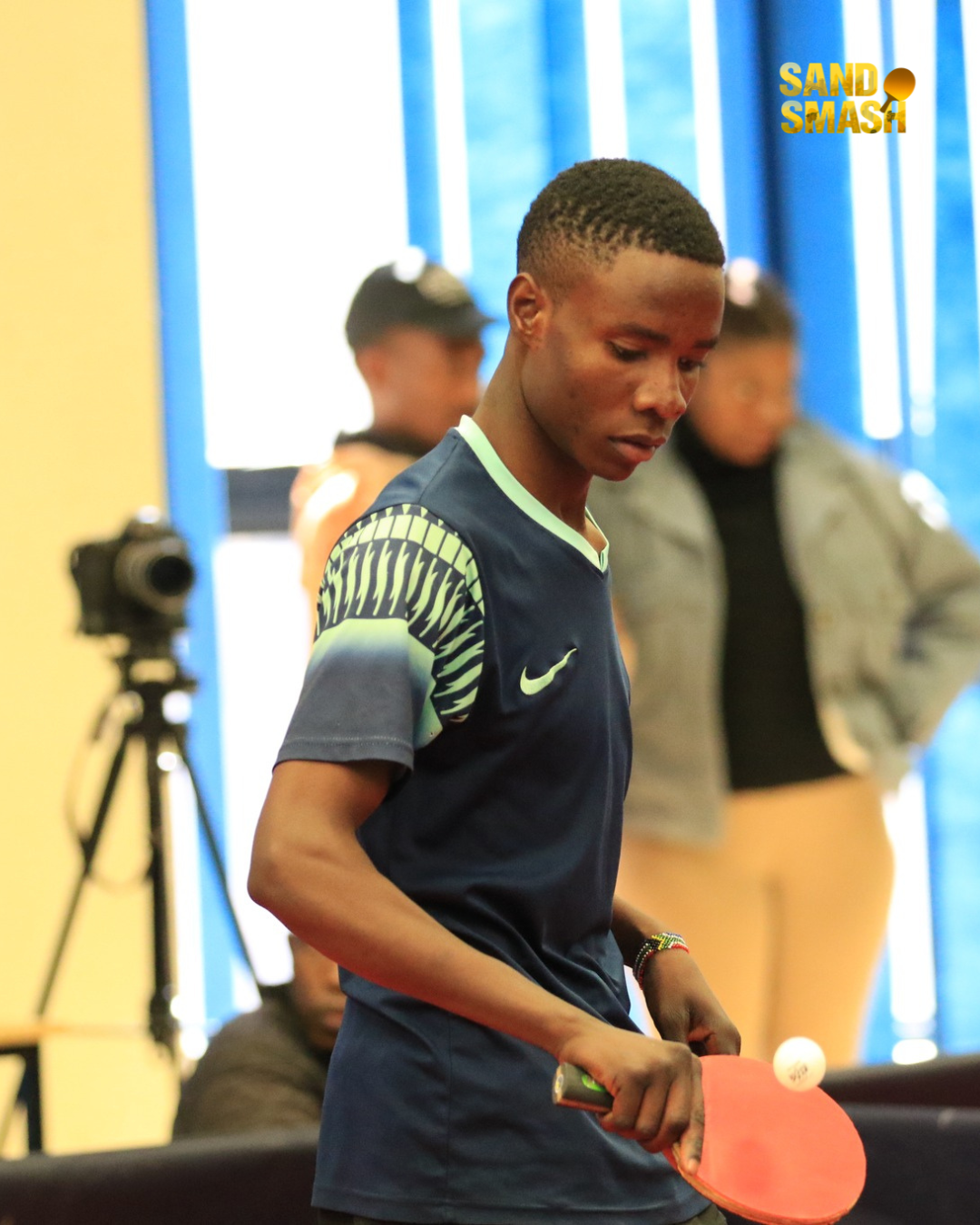
Sophie Nkhuwah paid 2,340 kwacha to learn how to coach her two little sisters.
K540 for travel. K1,800 for accommodation. Eight to nine hours from Chililabombwe on the Copperbelt to Lusaka, and eight to nine hours back. She does not have a club. She does not have a table. She does not have a single student outside her own family.
She went anyway.
The Course
The ITTF Level 1 Coaching Course was held at the National Sports Development Centre in Lusaka. It was taught by Kealeboga Keitseng, an ITTF Development Officer. It ran for ten days.
Day 1 was administration and governance. Day 2 was officiating. Days 3 through 7 were coaching, with Day 7 focused on para table tennis. Days 8 and 9 were a youth training camp. Day 10 was the selection tournament for the Region 5 Youth Games in Maputo.
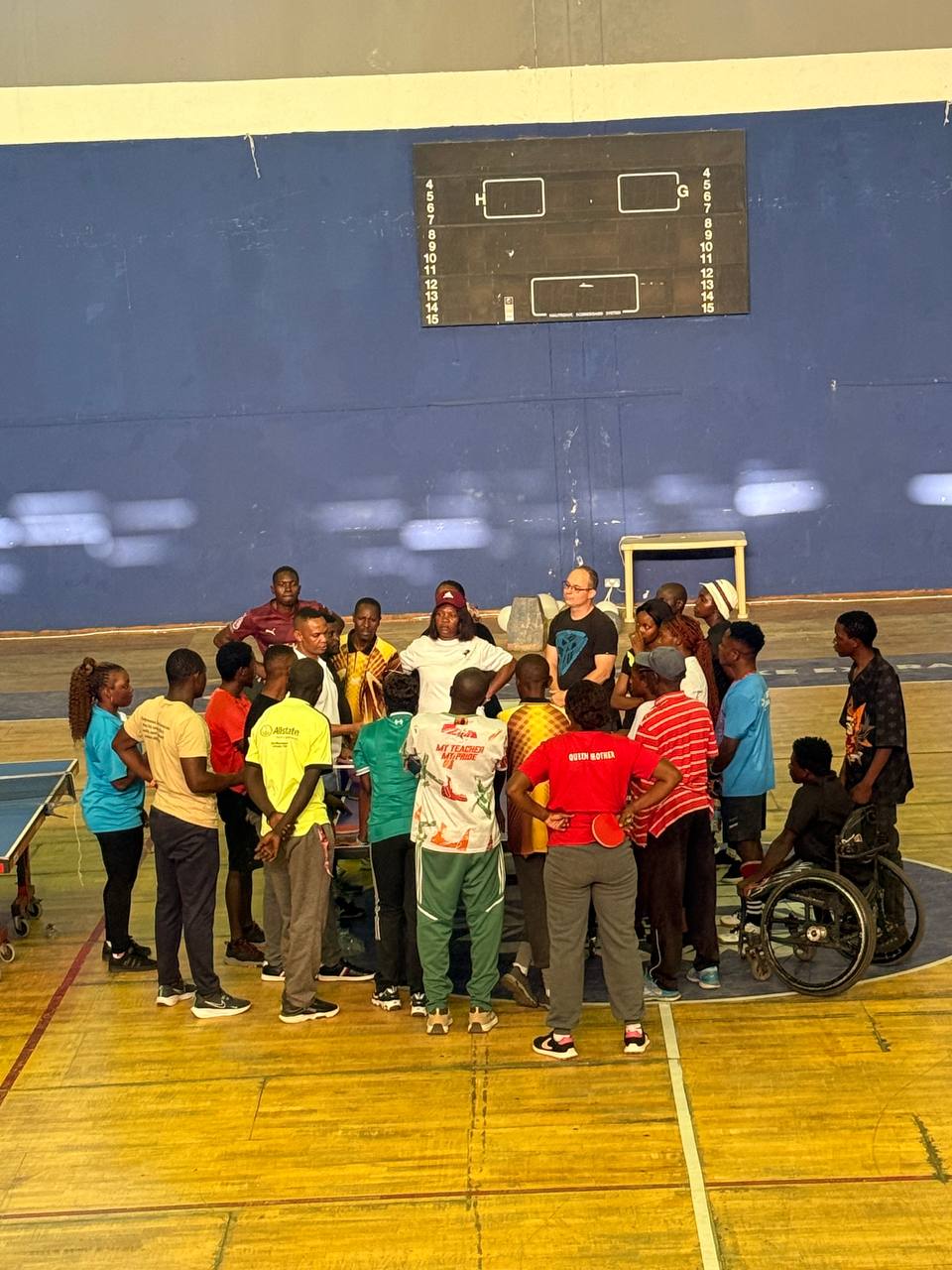
ITTF Level 1 Course participants gathered at the National Sports Development Centre in Lusaka.
More than forty people wanted to be part of the course. Logistical challenges cut the number down to twenty-three.
The selection logic was deliberate. First priority went to coaches who had already participated in the National Youth Games, because they had proven they were developing players. Second priority went to teachers. Then grassroots club organizers. Then senior players transitioning into coaching, including university players. One para table tennis player was trained alongside them.
Of the twenty-three who completed the course, thirteen passed the practical and will receive the ITTF Level 1 certification after completing 30 hours of coaching practice. The remaining ten received Club Coach certification.
ITTF funded the program. The National Olympic Committee of Zambia, the National Sports Council of Zambia, Midlands Para Table Tennis Club, and Tunya Titans Table Tennis Club partnered on it.
Nine of the twenty-three coaches were women.
Sophie
Sophie started playing table tennis in 2016 in Lusaka. Life moved her back to the Copperbelt, and she stopped for five years. She came back to the sport in 2021 and hasn't stopped since.
Sophie didn't fit neatly into any of ZTTA's selection categories. She was a senior player, technically, but she wasn't coaching anyone yet. She got in anyway.
Before the course, her theory of coaching was simple.
"I thought anyone who knows the basic rules and has some knowledge about table tennis can be a coach."
— Sophie Nkhuwah
She learned she was wrong. What stuck with her most was how to introduce the forehand and backhand to a beginner. Not the shot itself. The introduction. The order. The language.
She does not currently coach anyone. Her two little sisters keep asking her to teach them to play. She does not own a table. She is planning on getting one for a start.
Her thoughts on what ITTF and ZTTA are missing are sharper than anything else I got in four interviews.
"Grassroots coaching isn't just 'pro training for kids,' it's a totally different beast that needs its own lane. They need to stop obsessing over elite tactics and start certifying 'Grassroots Specialists' who actually know how to make the game fun and keep people coming back. It's not enough to just drop tables at schools or clubs and hope for the best. You need to fund the people who actually run the sessions, otherwise those tables just gather dust and become useless. They should also ditch the 'youth only' mindset and get adults involved."
— Sophie Nkhuwah
Chungu
Daniel Chungu is a teacher at Chama Primary School in Chama District, Eastern Province. He is an undergraduate Physical Education and Sport student at Chalimbana University. He has been playing table tennis since 2006, when he started at Masala Secondary School. From 2013 to 2015, he represented Kitwe College of Education.
He is already an umpire, certified through ZTTA, and has officiated at local and international tournaments.
Before the course, he had never had any formal coaching education. His background was in playing, not teaching. Then he realized something he hadn't expected.
"Playing table tennis and coaching are somewhat different. You may execute a perfect stroke, forehand topspin, but teaching that skill is a different thing altogether. Therefore, I have been missing fundamental stages in my coaching sessions since I coach at a secondary school."
— Daniel Chungu
The course taught him that you can't teach what you don't know. It also taught him that sometimes a player will outshine you, and the right thing to do is pass them to a more experienced mentor.
Chungu currently coaches 16 pupils. He works with government-supplied tables. The Zambian government has equipped many schools that run PE programs with tables, training balls, and rackets. Rackets and balls are still a challenge in his region, but the tables are there.
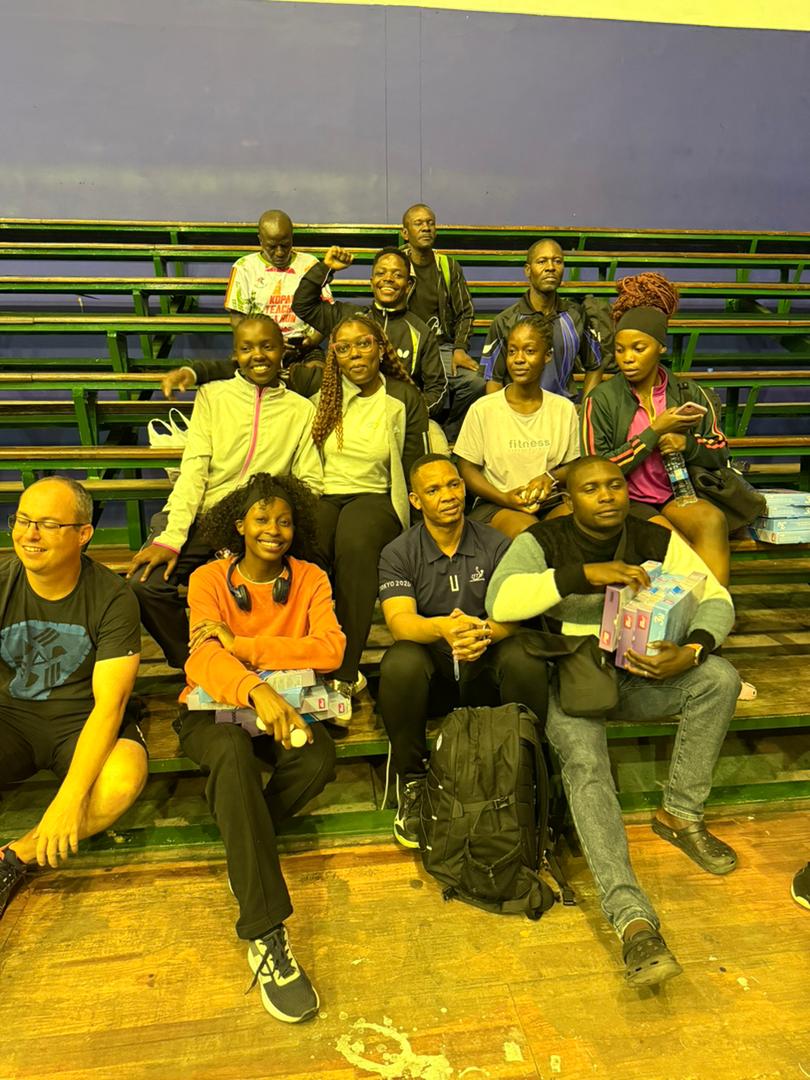
Course participants during a break — coaches from across Zambia came together for ten days of intensive training.
Shayumbu
Shayumbu Nyimba is a student at the University of Zambia. She has been in table tennis for 13 years.
She did not pay anything for the course. It was in her city. She took five days off school to attend.
She ended up coaching because her university needed a team. Women especially, she said, had no knowledge of how to play. She was one of the best players available. There were no coaches at university level. So she took the step.
Her coaching methodology before the course was honest and specific.
"Firstly we stretch a little, immediately go to the table do some forehand drive as well as backhand drive. Teach players how to serve. Thereafter play game 5 and we end. No nothing formal existed. I had no proper guidance but only taught what I thought I knew."
— Shayumbu Nyimba
The thing she learned at the course that contradicted what she had been doing her entire coaching career was the difference between a push and a chop.
"Wow it really opened my mind cause I literally thought a push was a chop. So even when teaching I would tell my players to say chop yet the stroke in play is supposed to be called a push."
— Shayumbu Nyimba
She coaches her university colleagues. Two proper tables. That is what she has.
When asked what ZTTA and ITTF are getting wrong, she was blunt.
"They have no framework on how to go about it. It starts from there. Put up a framework, set objectives and goals. Thereafter they must be ready to travel around the country and train key stakeholders, physical education teachers as well as players."
— Shayumbu Nyimba
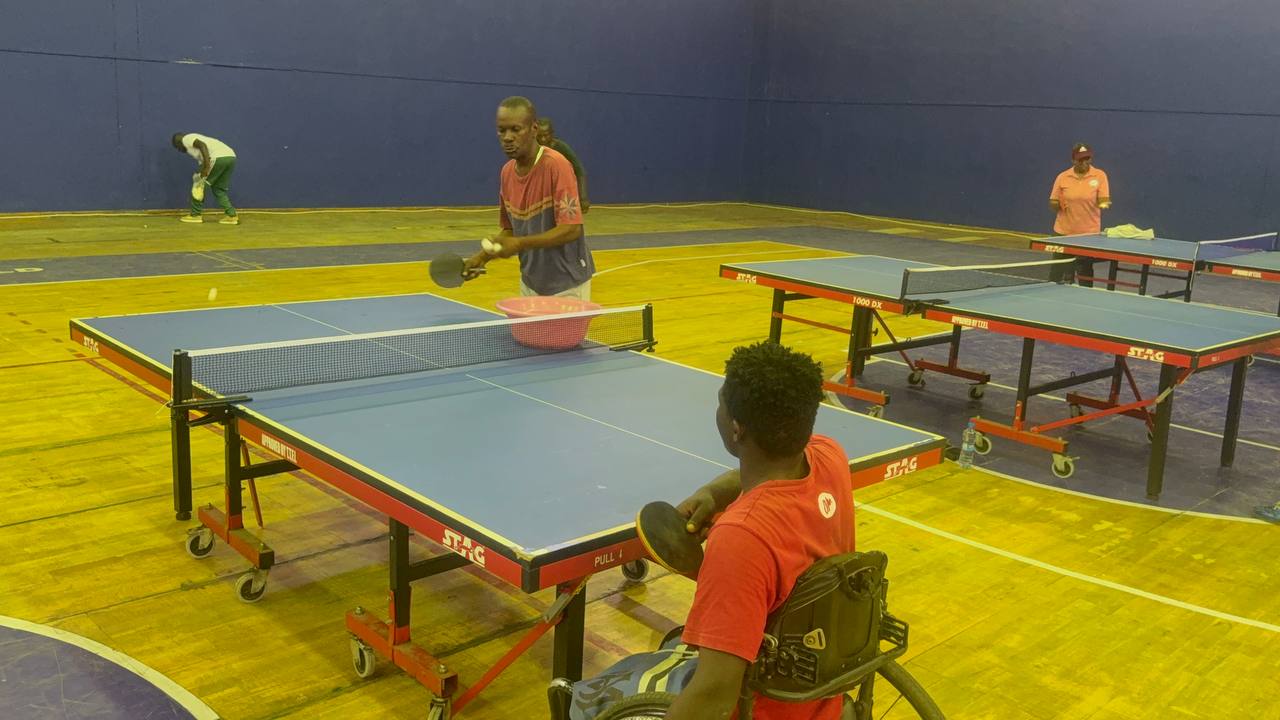
Day 7 of the course focused on para table tennis coaching — one para athlete was trained alongside the other coaches.
Mwape
Mwape Mambwe has been in table tennis for eight or nine years. Player first, then umpire, now coach. She is based in Lusaka.
She came to coaching through leadership. She was the team captain for her university. The less experienced players needed help. She found herself mentoring them, preparing them for tournaments, explaining things she had picked up by watching her own coach. It turned into formal coaching without her planning it.
Before the course, her education was what she called informal. Personal experience. Watching her own coach. Observing other coaches. Videos online.
The course taught her structured, player-centered coaching. Adapting to individual player needs, learning styles, and long-term development. It also taught her something she said she needed to hear: start from the very basic route.
She currently works with ten players — a mix of university athletes and developing players. She trains them in separate sessions because their levels and needs are different. Occasional combined sessions for match play help the developing players learn from the more experienced ones.
Her closer was the same observation, said differently, that I heard from Shayumbu and Sophie.
"The biggest issue is what happens after training. Coaches are educated then what. There needs to be follow-up, after training, access to equipment, structured programs, and clear pathways for growth. Without that, it becomes difficult to translate knowledge into real impact at grassroots level."
— Mwape Mambwe
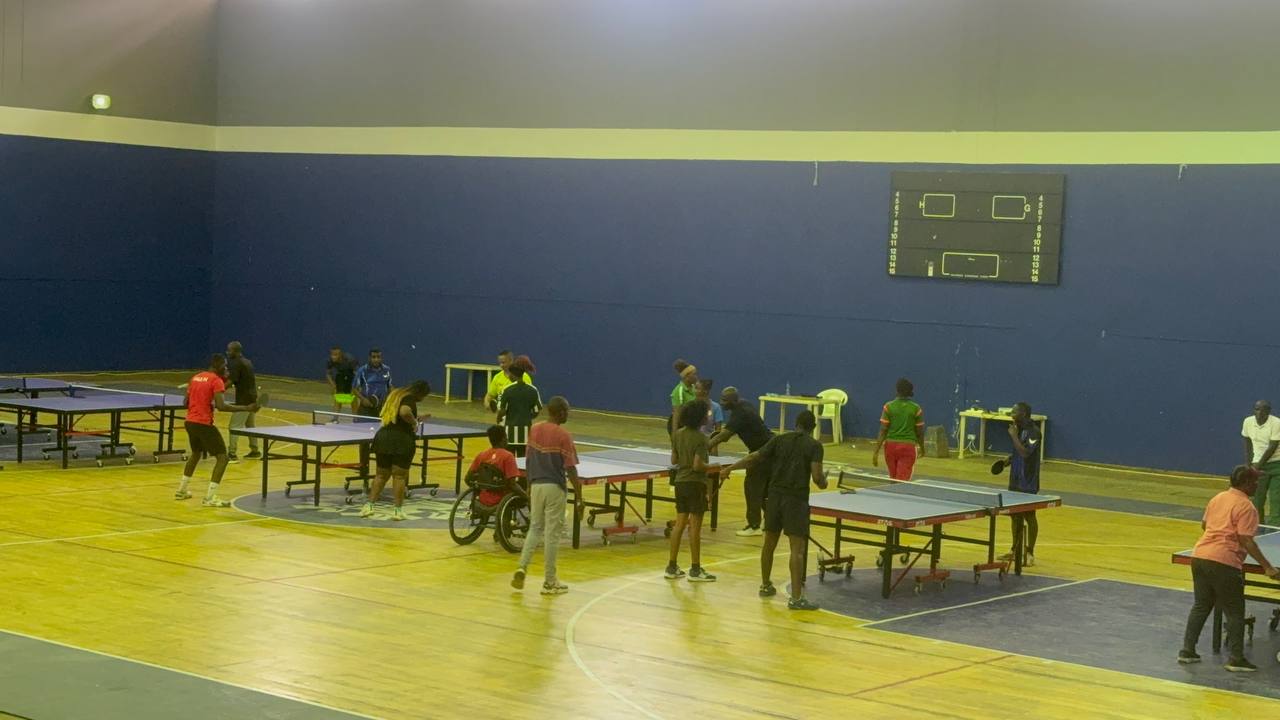
Training in action at the National Sports Development Centre — players and coaches working across multiple tables.
The Framework Problem
Four coaches. Same certificate. Four completely different realities.
One was trained for free in her own city. One paid 2,340 kwacha out of pocket to attend. One took five days off school. One took time off work.
All four walked out with the same qualification. None of them walked into the same pathway.
This is the pattern they named separately. Shayumbu: no framework. Mwape: educated then what. Sophie: tables gather dust if you don't fund the people running the sessions. They didn't coordinate their answers. They said the same thing because it is the same thing.
What Certification Unlocks
Collins Mwenda is ZTTA's head of technical.
For him, certification unlocks assignments. Midlands Para Table Tennis Club has already requested certified coaches. There is national team access. School collaborations are being hoped for. Follow-up will be conducted.
The coaches outside Lusaka will be put to task to develop the sport in their regions. The technical committee will measure progress and look for opportunities. ZTTA is still an association without funding, but it is moving to establish partnerships.
A Level 2 pathway is planned for 2028. ZTTA is hopeful it can be hosted inside Zambia. First, they need to see the progress of the coaches who went through Level 1.
That is two years away.
What Nobody Is Talking About
I asked Collins what one thing about grassroots coaching development in Zambia isn't getting talked about enough.
His answer was about the Copperbelt. Specifically, the Mine Trust Schools.
For years, the Mine Trust Schools have been running their own grassroots table tennis, with their own association, outside the ZTTA structure. A lot of the university-level players in Zambia today came out of that system. ZTTA has not been formally partnered with them.
"We need more than ever, to partner with them and involve them in our trainings because a lot of students in university setups are products of that system."
— Collins Mwenda
The same honesty applies to schools more broadly. The Zambian government supplied PE-equipped schools with tables, balls, and rackets. ZTTA was not part of that rollout. There is no coordination and no way for the federation to track how the equipment is being used.
These are not failures. They are admissions. The people who actually built table tennis infrastructure in this country aren't all inside ZTTA. Some of them are school teachers in Eastern Province working with equipment the federation can't track. Some of them are mining communities in the Copperbelt running programs the federation hasn't formally joined.
The coaching course is the first attempt to pull all of this into one room.
What 23 Certified Coaches Means
A framework doesn't exist yet. Follow-up is a plan. Level 2 is two years away. The Mine Trust Schools are still uncoordinated.
The certificate is real. The pathway is being built.
The coaches went home to four different versions of what coaching in Zambia actually looks like. Sophie is planning to buy a table. Her sisters are waiting.
— The Dispatch —
Every story, first.
Get the latest table tennis stories, player profiles, and advocacy updates delivered to your inbox.
We respect your privacy. Unsubscribe at any time.