
Manuel Pimenta was a player first. Vice-champion of Angola's national competition. But somewhere along the way, the game shifted, from competing to building. From winning his own matches to making sure an entire country's players could win theirs.
He started coaching kids at school. Then he went to China for almost three years. When he came back, everything changed.
Pimenta has been coaching since 1990. He became the national junior team coach in 1996 and took over the senior national team in 2003. Between 2009 and 2014, Angola brought in a Chinese coach for two years and then a Portuguese coach for three. After that, Pimenta was hired again. He has been Angola's senior national team coach ever since.
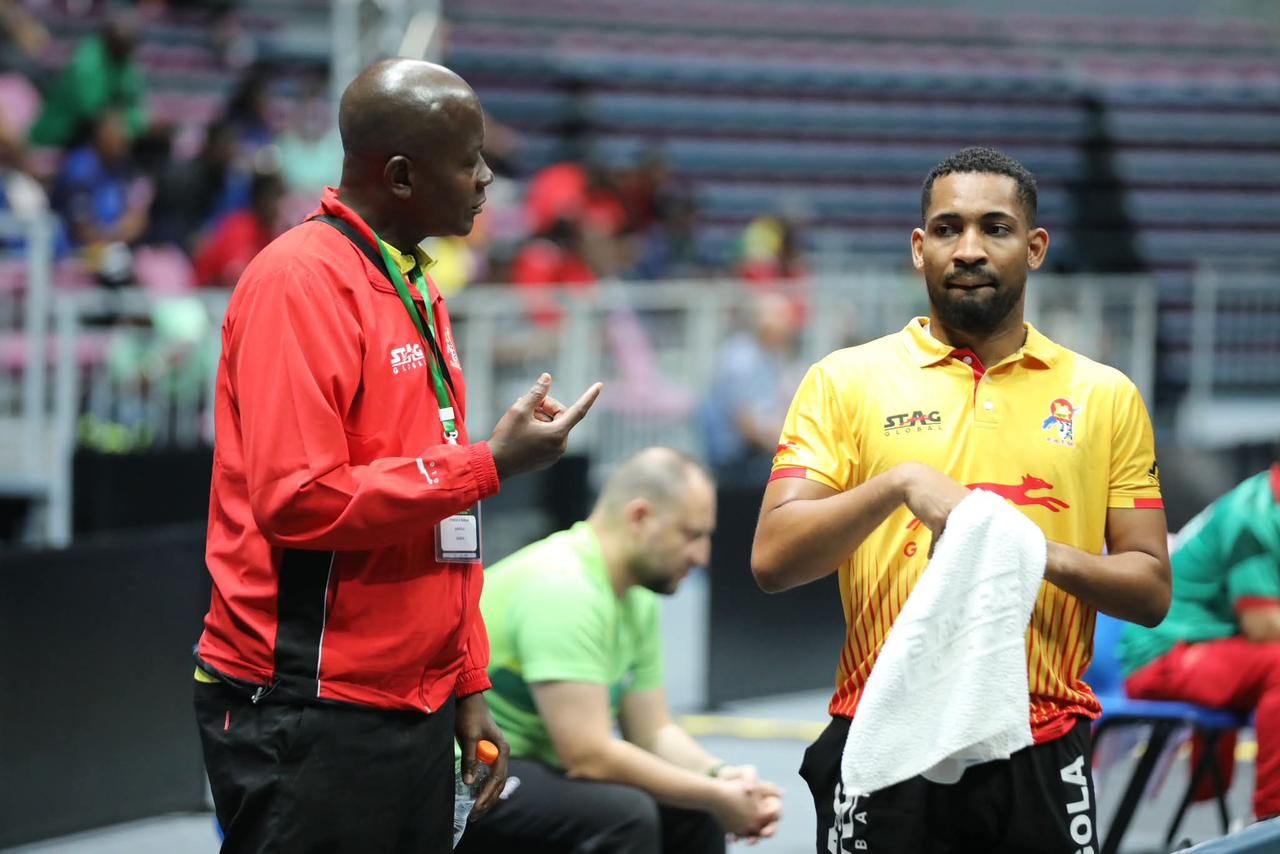
Coach Pimenta on the bench with Elizandro André — three decades of conversations exactly like this one.
From the Ground Up
When Pimenta started, Angola's table tennis was in a completely different place. But since 1996, he has watched the number of players and their quality improve dramatically. It wasn't about just showing up to regional competitions anymore.
Angola was no longer going to just participate. Angola was going to fight.
Between 2011 and 2014, they were consistently on the podium. They were vice-champions at the U15 level in Africa. And that youth program is the reason Angola has a strong senior team today, the players from 2011 grew up, and they are still here.
But Pimenta knows what is missing. His players only get 2 to 3 international competitions per year. That is not enough.
China
The turning point in Pimenta's coaching career was a training scholarship in 2011. He spent nearly three years in China. What he saw transformed everything he thought he knew about coaching table tennis.
The Chinese system was built on discipline. Stronger training. If a player did not succeed in one exercise, they did not move on to the next one. There was no skipping ahead. There was no "good enough."
That is exactly what Pimenta brought back to Angola. And that is exactly why Angola's national team now competes internationally.
"Athletes must have discipline."
— Coach Manuel Pimenta
A Typical Week
A typical training week under Pimenta is structured and intentional. Technical work happens every day, addressing whatever difficulties the players are facing, refining their game shot by shot. Physical training is reserved for Wednesdays and Saturdays, after the regular sessions. He also introduced tactical work: how to play against specific opponents, how to think on the table, how to adjust mid-match.
Every week. Year after year.
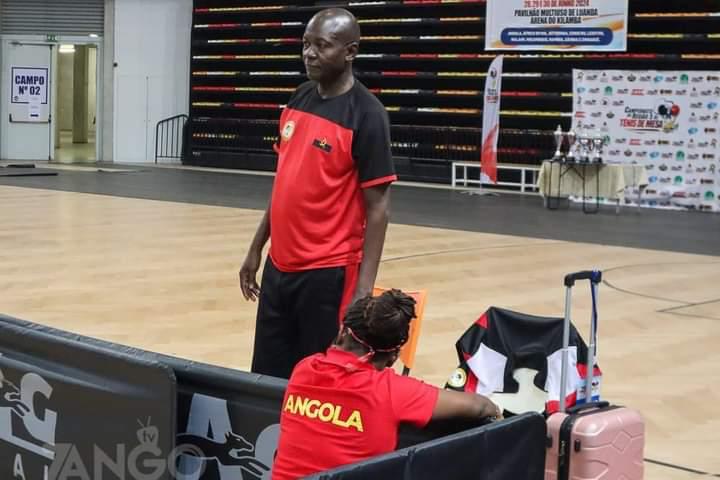
Pimenta at the Arena do Kilamba in Luanda — always present, always watching.
Spotting Talent
For the senior national team, Pimenta monitors player performance throughout the year, tracking results in internal competitions. Win enough tournaments, and you earn your spot.
For the kids, it is different. The federation organizes festivals for newcomers, events where children come just to enjoy and play. During these festivals, Pimenta watches. He studies how the kids move. Not technique, not strength, but movement. The way a child's body reacts to the ball tells him everything he needs to know about their future in the sport.
The Facility
The national team trains at the High Performance Centre at CARA in Luanda. It works. But it could work better.
The flooring has been the same since 2006. Table tennis players make quick, explosive movements, and old flooring can injure players. Pimenta wants it replaced. He also needs three-star balls, higher quality balls that help players develop faster. A robot machine would help. Better blades and rubbers for the national team players would make a difference too.
And it is very hot.
These are not extravagant requests. These are the basics that developed nations take for granted.
The Players He Built
Pimenta is proud of many players. Elizandro Andre. Edvane Neto. Isabel Albino. Ruth Tavares. Alessio Peter. Most of them went with him to China, but they started here in Angola. They were selected from local programs, developed domestically, and then taken to China for two and a half years to train at the highest level.
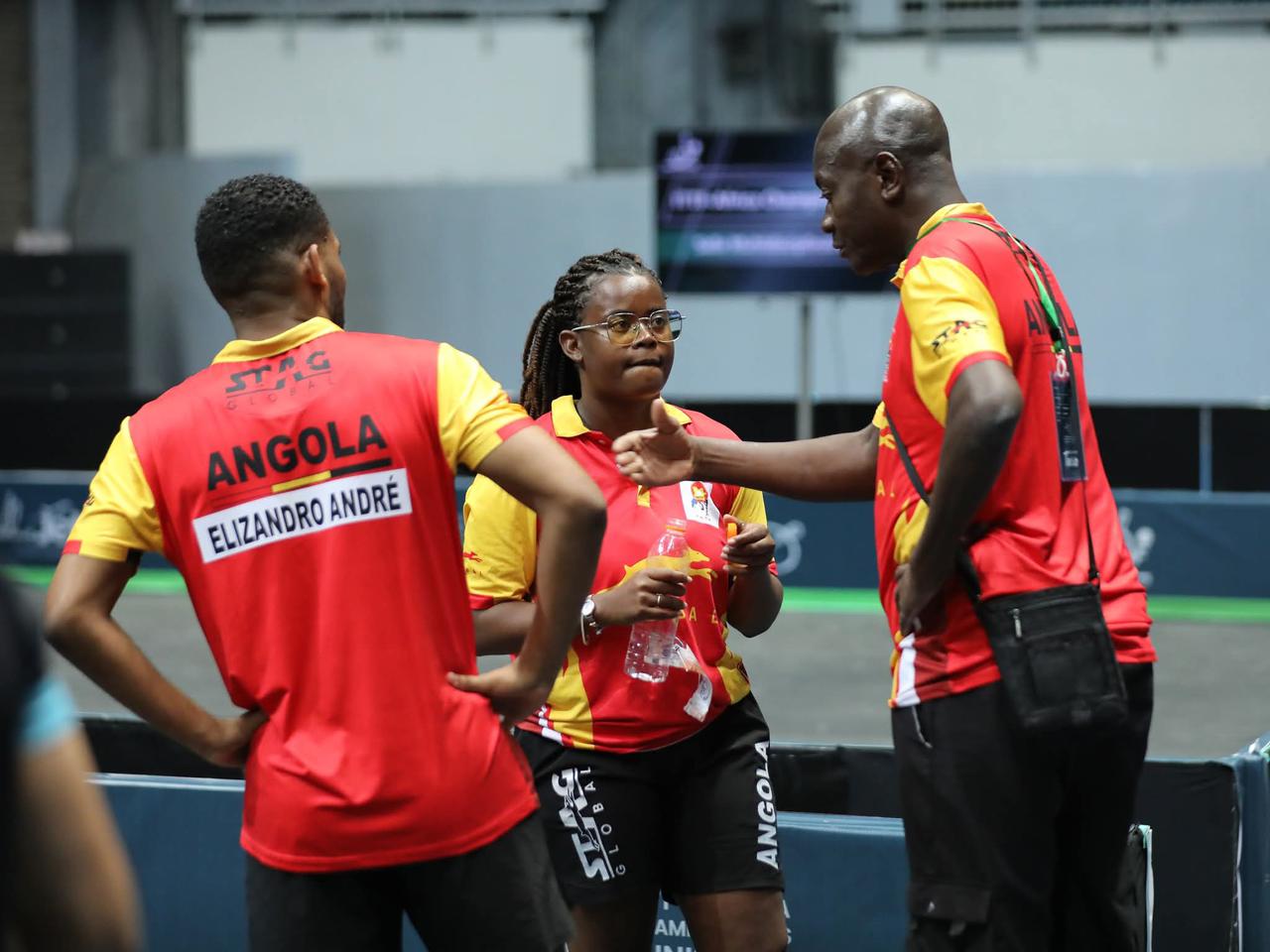
Coaching is conversation. Pimenta with Elizandro André and a teammate between matches.
Isabel Albino is still representing Angola's national team to this day. All of them became champions in junior and senior national competitions. They won international events, the Regional 5 Games, the CPLP Games across the Portuguese-speaking community: Portugal, Mozambique, Cape Verde, Timor-Leste, Guinea-Bissau, Brazil.
These are players Pimenta built from the ground up.
The Moment in Ghana
In 2015, Angola's women's national team traveled to the Pan-African Games in Ghana. In the team competition, Isabel Albino drew Tunisia's number one player, Fadwa Garci.
It should have been straightforward for the Tunisian. In every set, Isabel fell behind. Every single set. But every time she was at a disadvantage, she recovered. She clawed back. She fought.
She won 3-0.
Pimenta remembers it as the most memorable match he has ever seen from his players at the continental level. That is what 30 years of building looks like, a player you developed, on the biggest stage, refusing to lose.
But not all of them stayed.
The Ones Who Left
Pimenta has lost players. It is the part of coaching that nobody talks about.
Aléssio Peter is the name that comes up. Pimenta feels like he lost him. If it were possible for Aléssio to return, he believes he would. But sometimes, players feel they are not getting what they expected from the system. And the things that drive them away are things Pimenta cannot always control.
This is the reality of building a program in a country where the sport is still growing. You invest years into a player's development, and sometimes the system around you cannot hold them. The support falls short, and some players walk away.
The Gap
When Angola's players compete internationally for the first time, they feel proud. Pimenta sees it every time. They want to win. But there is still a big gap between Angola and the developed African table tennis nations. Egypt. Nigeria. The countries that have been investing in infrastructure for decades.
"If Angola's players can play more in international competition, we can reduce that gap."
— Coach Manuel Pimenta
More exposure. More experience. More matches against players who think differently, who play differently. That is the formula. It has always been the formula. The challenge is getting there.
The Dream
His dream is simple and enormous at the same time: for Angola to participate in the Olympic Games as a team.
Not one player qualifying through a wildcard or a continental quota. A team. Angola, on the Olympic stage, in table tennis.
That is the vision that drives 30 years of work.
Between the youth festivals where he scouts talent, the daily training sessions where he refines technique, the physical work on Wednesdays and Saturdays, and the emotional weight of watching players leave a system that cannot always support them, Manuel Pimenta carries Angolan table tennis on his back.
He has been doing it for 30 years. He learned from the Chinese. He built a generation of champions. He watched some of them leave. He kept going.
When the flooring is old and the balls are not three-star and the training hall is too hot, he still shows up. Because that is what builders do.
They show up. And they keep building.
Thirty years. One coach. A nation's table tennis built shot by shot.

— The Dispatch —
Every story, first.
Get the latest table tennis stories, player profiles, and advocacy updates delivered to your inbox.
We respect your privacy. Unsubscribe at any time.