
For years, getting to practice meant a long journey for Janet Irigoyen. There is no accessible public transport in Lambayeque, so she traveled nearly four kilometers in her wheelchair to reach the training hall, twice a week, after work.
When she arrived, five athletes shared a single professional table in a room that a private company let them borrow. They did it because they loved the sport, and because that room was also where the friendship and the motivation were.
In 2021, they lost the space. But the athletes did not stop. They covered the costs themselves, organized fundraisers, and found new ways to keep practicing the sport that gave them so much.
This is the reality of para table tennis in Peru. Almost everything is concentrated in Lima, including the infrastructure, the coaches, the national training center at VIDENA, and the federation itself. For players in the provinces, simply showing up to train or compete takes effort that most people never see. And para athletes carry an extra weight on top of that, from accessible transport that does not exist to the cost of physiotherapy, equipment, and the long road trips a body managing a disability has to endure.
I spoke with three athletes from three different cities, and with the coach who works with all of them. One plays in the south, in Arequipa. One plays in the capital, Lima. And one plays in the north, in Lambayeque. They have different disabilities and compete in different classifications. But they all say a version of the same thing: this sport gives back more than it takes.
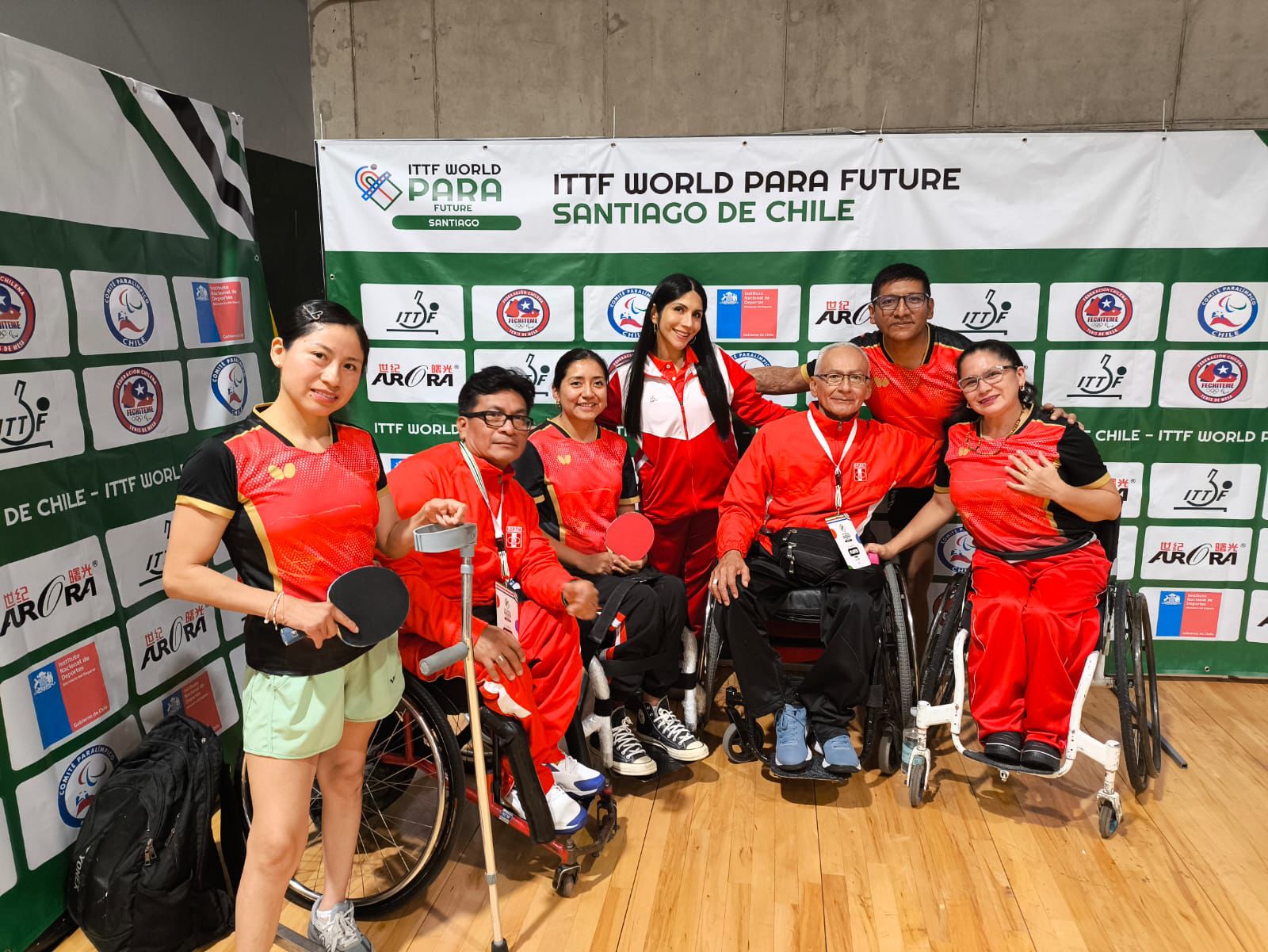
Peru's para table tennis team at the ITTF World Para Future in Santiago de Chile.
The Team
Claudia Félix coaches Peru's national para table tennis team. She started as a conventional player and national team member, and she found para table tennis almost by chance. The federation offered a free training camp for coaches, she signed up, and it became her first experience with the adapted game. A classifiers' course pushed her further. The instructor shared years of experience and showed her what Peru could become if it worked with real professionalism. Claudia has not let go of that vision since.
Her team has around 25 athletes spread across three departments: Arequipa, Lambayeque, and Lima. They range from class 3 all the way to class 11. Ten of them now hold an international classification, across classes 3, 5, 6, 7, and 10. Getting the rest classified is the goal, because without a classification an athlete cannot compete abroad. And without competing abroad, it is very hard to improve.
For readers who are new to para table tennis, Daniel Prado, one of the athletes in this story, explained the system simply. There are eleven classes in total. Classes 1 to 5 compete in wheelchairs, with class 1 being the most affected by disability and class 5 the least. Classes 6 to 10 play standing, following the same scale. Class 11 is for athletes with intellectual impairments.
The federation has started to do more. Since the new leadership under Magali Montes arrived in 2025, it has begun covering some travel, accommodation, and meals for provincial athletes. It has even allowed players without an international classification to travel abroad and gain experience. In February 2026, Magali spent two days in Lambayeque, visiting facilities, meeting athletes, and speaking with local authorities to understand their reality. She also hired a coach for the south. None of this is enough yet, but it is more than there used to be.
Arequipa: A New Passion
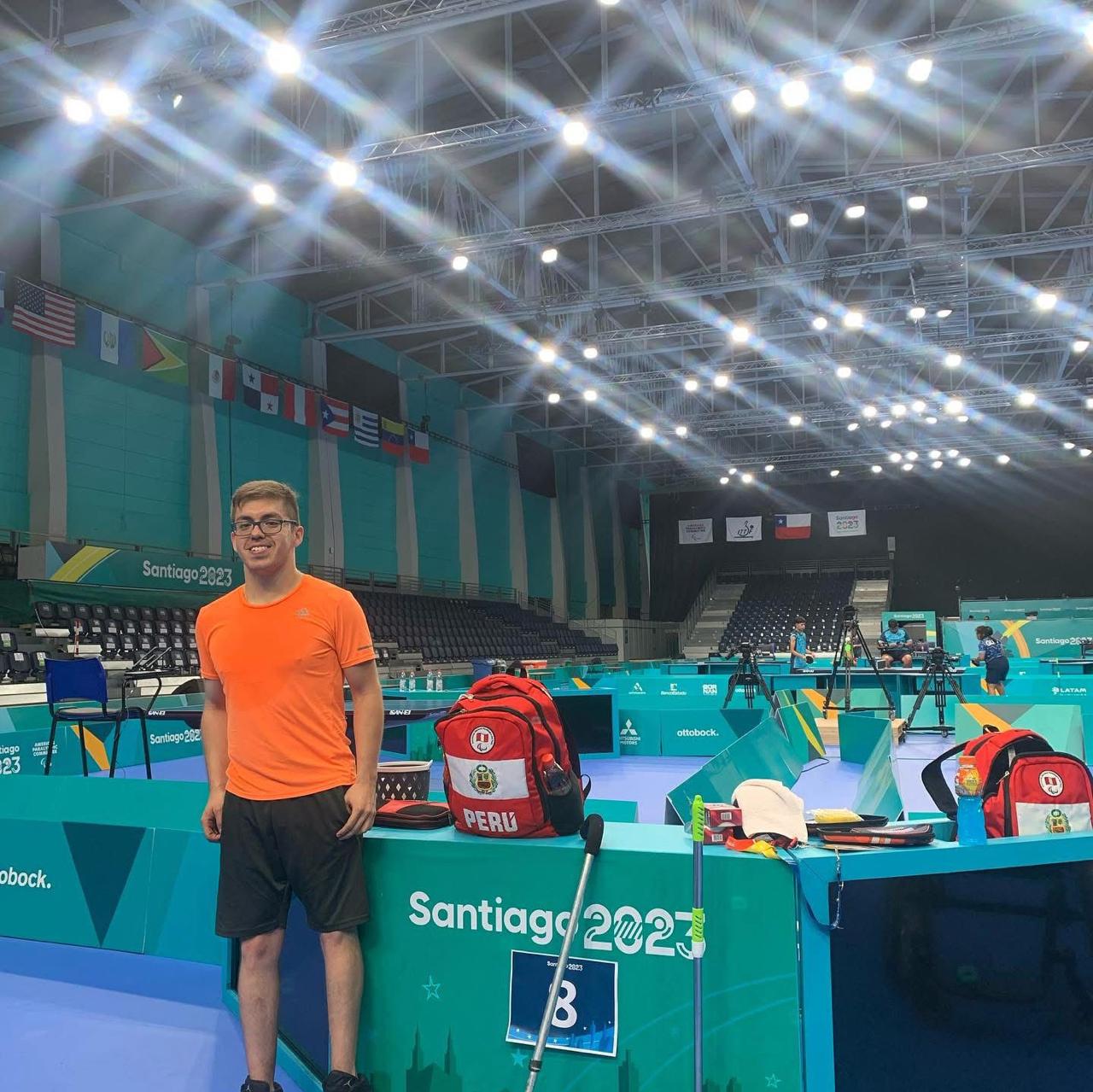
Daniel Prado at the Santiago 2023 Parapan American Games venue.
Daniel Prado's first dream was not table tennis. As a child, he wanted to be a goalkeeper. Despite his disability, he always tried to be part of the school football team, and the environment around him made room for it. His friends were happy to include him, and his love for the game was bigger than any difficulty he faced in the goal.
Everything changed when he was eleven. He and his mother moved to a new city, and there he started playing table tennis after school. His first coach, Giancarlo Scottini, showed him the sport and encouraged him never to give up and never to feel embarrassed about anything. Daniel did not feel anything special the first time he held a racket, but he knew a new passion in his life had begun.
Today, Daniel competes in class 6, which means he plays standing. His game is built on changing the rhythm of a rally and confusing his opponents with spin, and he considers his backhand his strongest shot. His weeks are demanding. He trains three hours a day from Monday to Friday and plays small tournaments in Arequipa on weekends. He goes to physiotherapy three times a week and meets a sport psychologist twice a month. In the afternoons, he works as a psychologist and as a German teacher for children and teenagers.
Daniel is proud of Arequipa. He describes a beautiful city with three volcanoes, wonderful weather, and the Colca Canyon, the second deepest in the world. Even though it is not the capital, he says, Arequipa produces athletes who compete and get great results for the country. But being a para athlete there is not easy.
"Being a para athlete is always challenging, because of the social stigma people have about disability. Many think we cannot do sports, compete, or even live a normal life."
— Daniel Prado
Most of his costs come out of his own pocket. He is preparing to travel to Argentina soon, and he is covering most of the trip himself. In a good year, he competes internationally twice. Usually it is only once, even though he would love to play five or six times a year. That gap frustrates him, because he knows other countries and opponents are training and competing at a higher level while he waits. So he tries not to miss training. He will rest when he is sick or truly exhausted, but otherwise he always shows up, because of what the sport means to him.
"Table tennis is my medicine."
— Daniel Prado
Daniel also has a bigger dream. He would love to build a table tennis school in Arequipa and a center to train other professionals. But he is honest about how far away that feels, because of the money and support it would take. He jokes that maybe one of the great footballers, a Messi or a Cristiano, could fund it one day. Then he says the thing he keeps coming back to. Dreaming is free.
Lima: Coming Back to the Game
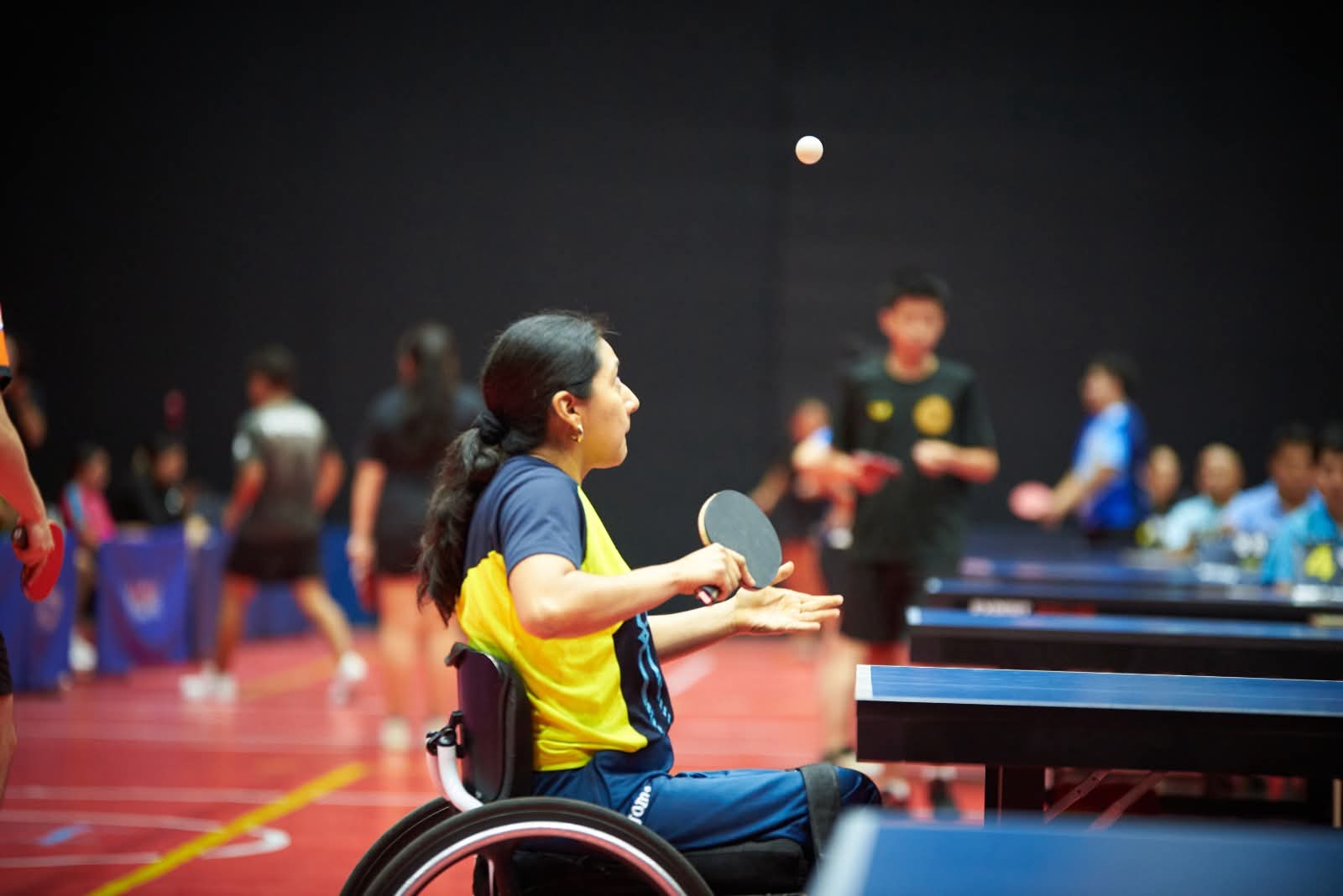
Maleny Martínez in action at a para table tennis event.
Maleny Martínez found table tennis through an advertisement for free classes at the Municipality of Lima in 2021. She played recreationally for a few months and then stopped. In December 2025, she returned, this time with the federation, and she has not stopped since. What kept her coming back was simple. She had always loved the sport, and the schedule and location finally fit her daily routine.
She trains three times a week at the Estadio Nacional with coach Claudia Félix, alongside a group of athletes with disabilities who practice para table tennis together. Her biggest obstacle is not dramatic, but it is real. Her work schedule often clashes with her training hours, so she cannot always complete her sessions.
From her perspective, the federation is more committed to para athletes than it used to be. They have a coach who works only with their group. They are allowed to play in the national tournaments. And in some cases, the federation supports their participation in international competitions too. Still, she is honest about the bigger picture. In a country where football is everything, table tennis gets very little attention, and para table tennis gets even less.
Maleny believes this lack of visibility is exactly why so few people with disabilities take up the sport. Fewer athletes means less competition and fewer chances to play at a high level. She does not see many young para players coming up, and she thinks the way to change that is to spread the word, even person to person. When more young athletes do arrive, she hopes they will have what she did not: a large, properly equipped space, flexible training hours, more than one coach, and financial support to get to training without so much difficulty.
"Sport changes lives, and more people deserve to know it and have the chance to practice it."
— Maleny Martínez
Lambayeque: Building From Almost Nothing
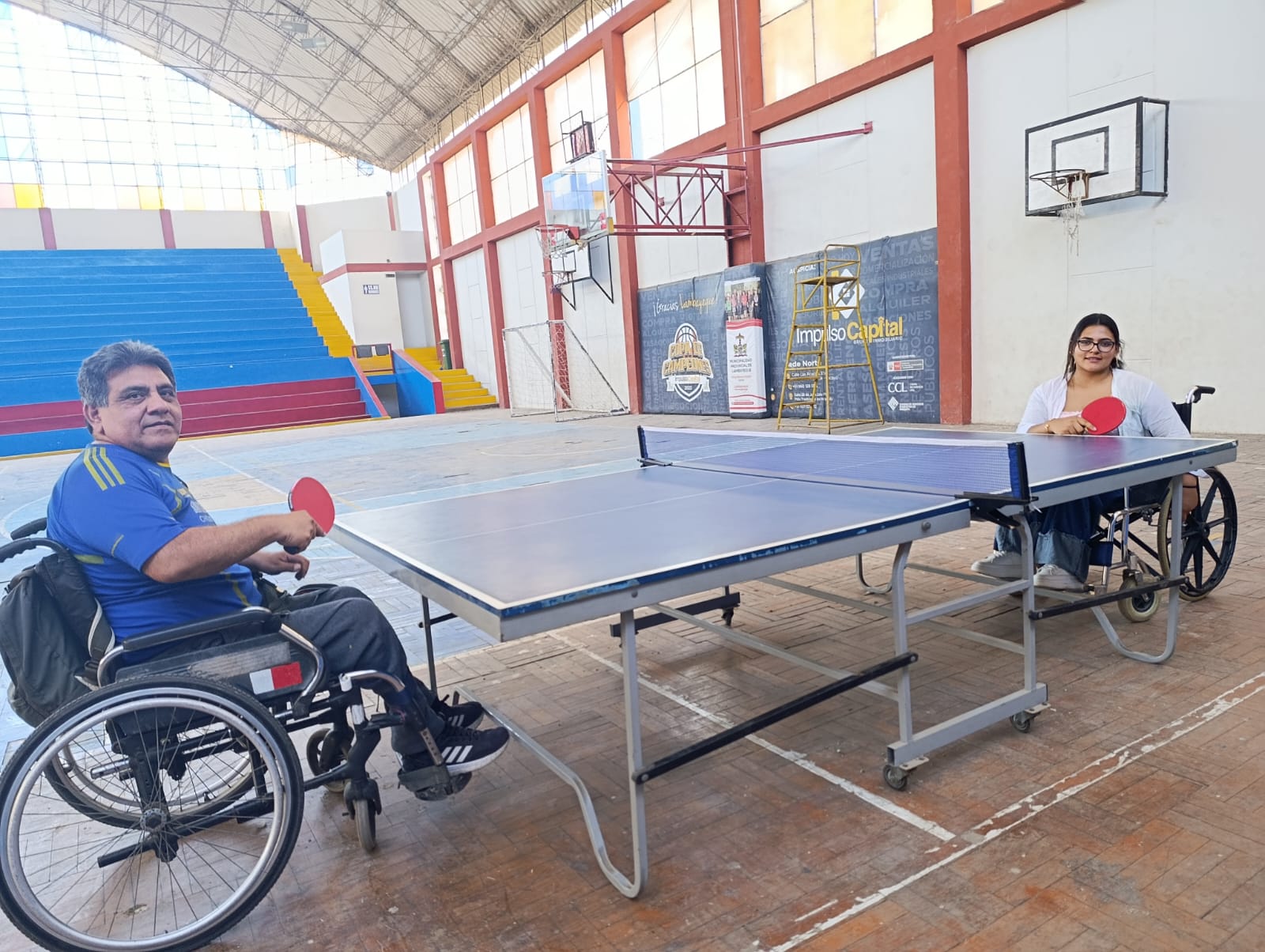
Janet Irigoyen during a training session in Chiclayo, Lambayeque.
Janet Irigoyen came to table tennis at 33, after a long period of rehabilitation, when she finally felt more stable in her personal and working life. She was looking for a sport that could adapt to her disability, and she discovered table tennis through friends who also use wheelchairs and had been competing for years. They taught her the basics and sparked an interest that grew into a central part of her life. Today she is 50, a business administrator who works as a virtual assistant, and the head of her household. She covers her own therapy, medication, transport, and sport.
The borrowed room, the four kilometers in her wheelchair, and the single table shared among five athletes were where it all began. Losing that space in 2021 could have ended things, but it did not. Today, Janet trains three times a week at the Chinese Colony Club in Chiclayo, from 5:30 to 7:30 in the evening, on a basic table with her own racket. The club is a private institution, so once again, the space is borrowed.
Across Lambayeque, there are around twenty athletes with physical disabilities who play table tennis, though only about ten train consistently. Five of them train at the Chinese Colony Club, and five at the Lambayeque Indoor Coliseum, in a space the municipality lends them that does not even have accessible bathrooms. There is no permanent specialized coach in the region. Most of these athletes travel between two and four kilometers a day in their wheelchairs just to reach training, because there is no accessible transport. Through 2025 and 2026, Janet did all of this while undergoing therapy for problems with her spine, trapezius, and shoulder.
Then came the moment that told her all the effort was worth it. In April 2026, she traveled to the ITTF World Para Future in Santiago and earned her international classification as a T5 player. It was her first ranking and her first real look at her own strengths and at how much Peru still needs to grow. The federation covered her travel and registration, and she arranged her accommodation through the Wheels of Hope foundation. To get there, she first attended a training camp at VIDENA in Lima and went through medical evaluations. A typical trip for her can take up to fourteen hours by land and cost around 150 dollars, much of it from her own pocket.
What she wants is simple and enormous at the same time. A fixed, accessible, properly equipped training space. A permanent coach. And basic equipment, like a multiball machine.
"Behind every para athlete there is a story of effort, sacrifice, and resilience."
— Janet Irigoyen
The Coach Who Believes
When I asked Claudia Félix about the moment she thinks about most, she said she did not have one tied to a single player. Instead, she has many small moments with different athletes. She has watched them get frustrated with a play they could not control, and she has felt that frustration with them. What stays with her is that they are not angry at the game. They are disappointed in themselves. Remembering them like that makes her feel an even greater commitment to supporting them through the process.
High performance, she knows, will not be easy. It is a long process. But watching her athletes pass the goals they set for themselves is what fills her with pride.
"The champion is the one who never gives up."
— Claudia Félix
That spirit runs through every person I spoke to. Daniel treats his training as medicine. Maleny came back to the sport years after she first walked away. And Janet lost her training space and found another, then earned her classification at fifty.
Looking Toward Lima 2027
In 2027, the Parapan American Games will take place in Lima. For Maleny and Janet, that is the goal they are training toward. They believe it will finally bring para table tennis the visibility it deserves, and that it will pull a new generation of athletes in behind them. Janet believes there are Peruvian athletes, including several from the provinces, who are capable of representing the country with dignity at that event. She is preparing as if she is one of them.
When I asked her to leave readers with one image, she described a group of athletes in wheelchairs arriving tired after long hours on the road, some in pain, others having left behind work, therapy, or family. And still, they enter the competition with excitement and pride, because they are representing their country.
That image captures para table tennis in Peru right now. It is a sport that is still growing and still facing many limitations, especially outside Lima. But it is held up by perseverance, by community, and by athletes who refuse to give up.
For years, these players have trained on borrowed tables, in borrowed rooms, with very little support. The remarkable thing is not that someone handed them a sport. It is that, with almost nothing, they are building one of their own. And in two years, when the country finally watches, they will be ready.
More from Peru
May 2026
Behind Every Peruvian: Parents
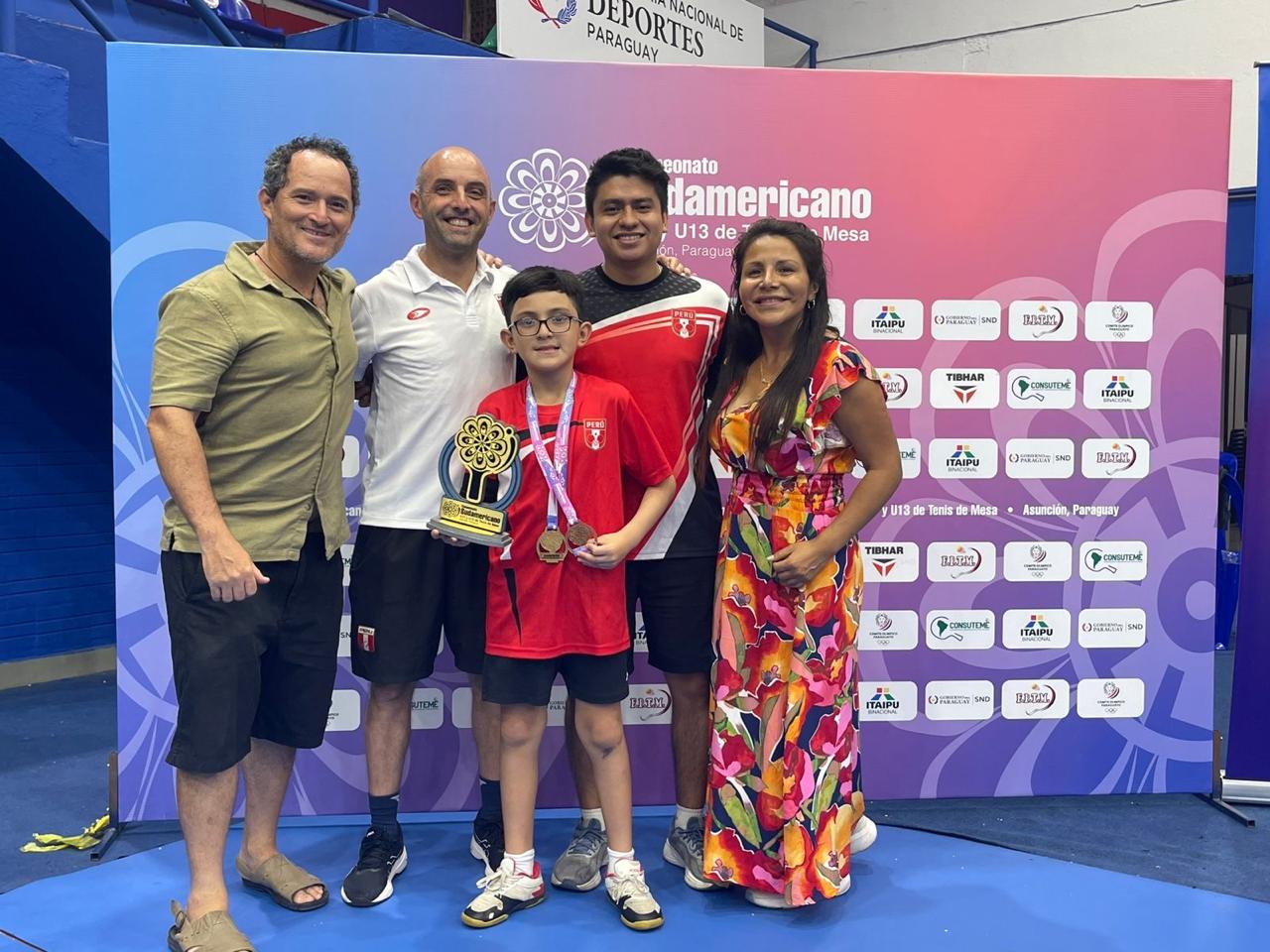
Four Peruvian fathers and the unwritten cost of building a national-level table tennis athlete out of one's own pocket.
March 2026
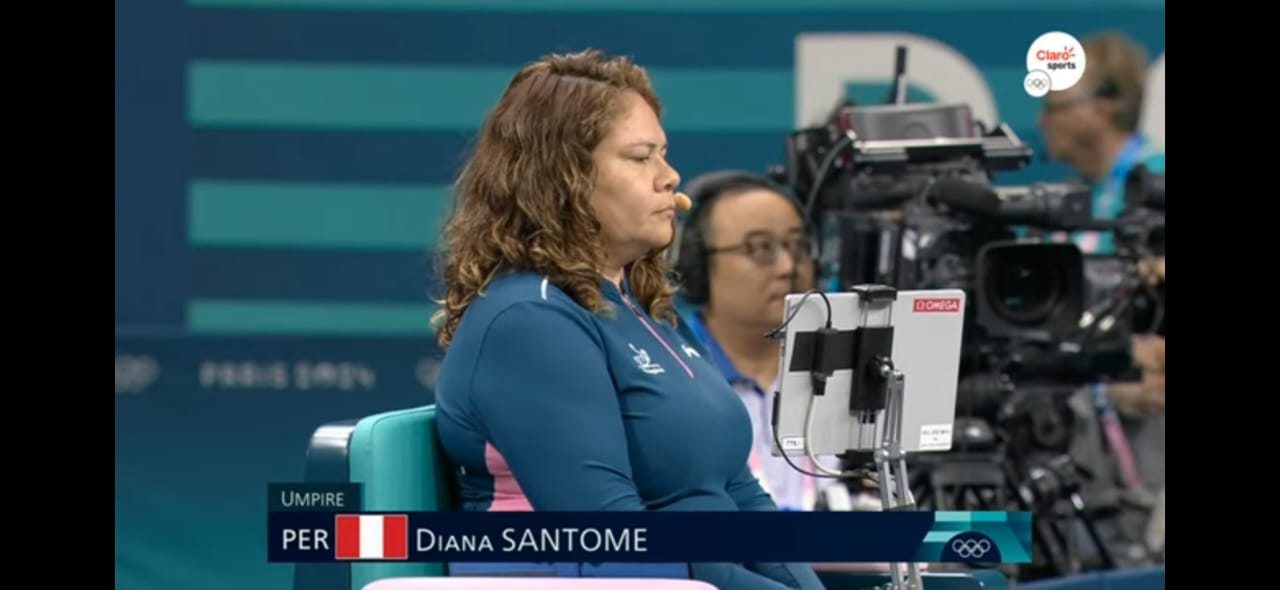
The Other Side of the Table: Diana Santome's Journey from Lima to the Olympics
Peru's only Blue Badge umpire has officiated two Olympic Games and is now building the next generation of umpires.
January 2026
Peru's 24-Year Wait Ends
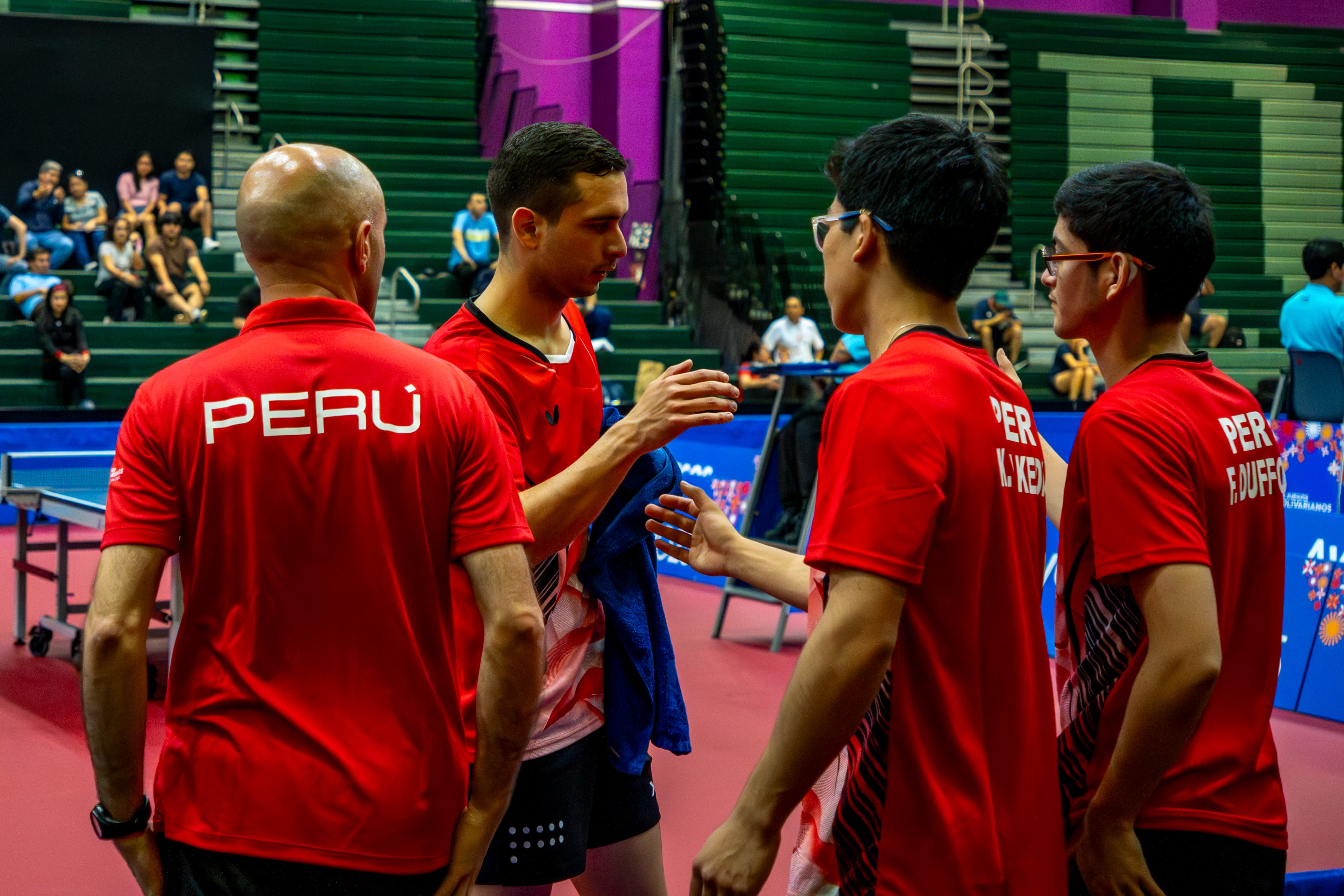
From debt and disconnection to continental gold in less than a year — how one Portuguese coach changed everything.
December 2025
From the Andes to the World: Peru's "Tables of Dreams"
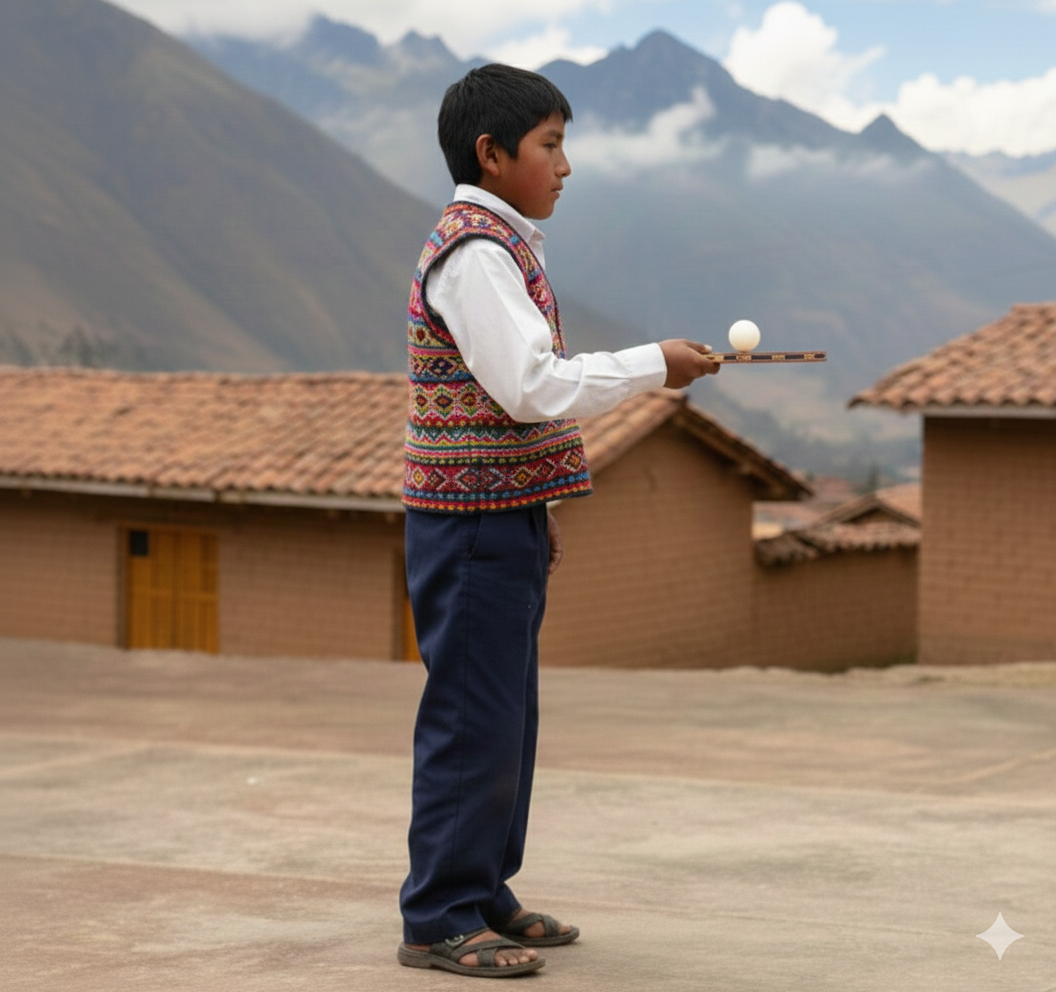
At 4,000 meters above sea level, children in Peru's central highlands receive a life-changing opportunity through the ITTF Foundation.
November 2025
Nano Fernandez: Carrying Peru's Hopes on His Forehand
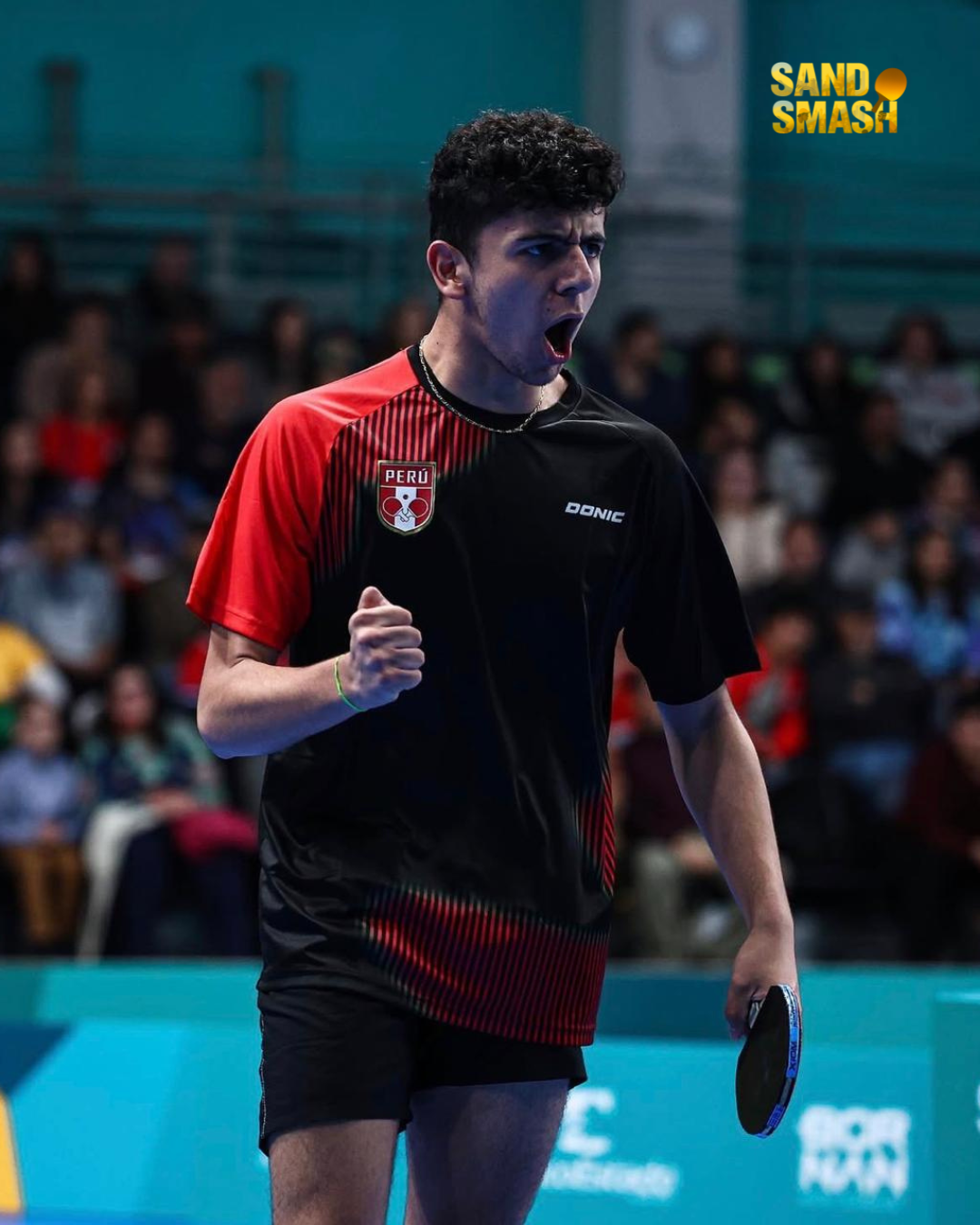
From Lima's national training center to South American Champion — now studying in Spain while carrying the dreams of a nation.
— The Dispatch —
Every story, first.
Get the latest table tennis stories, player profiles, and advocacy updates delivered to your inbox.
We respect your privacy. Unsubscribe at any time.